




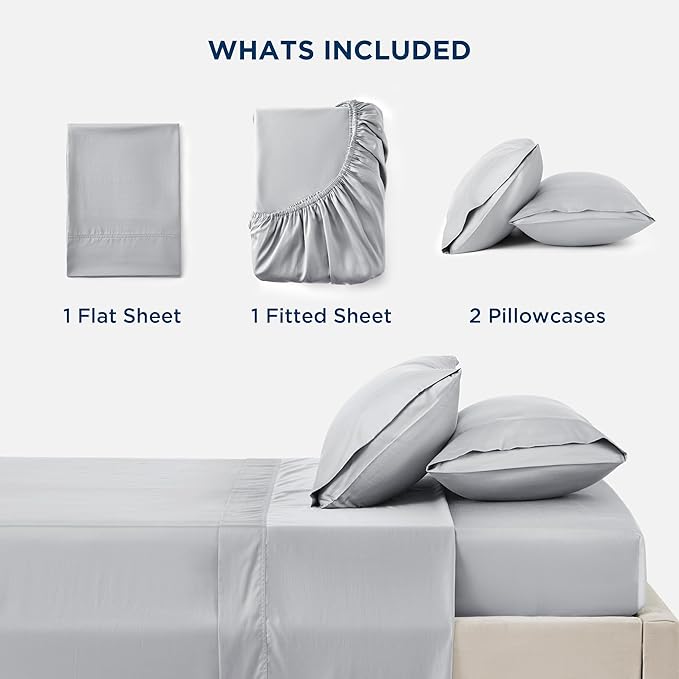
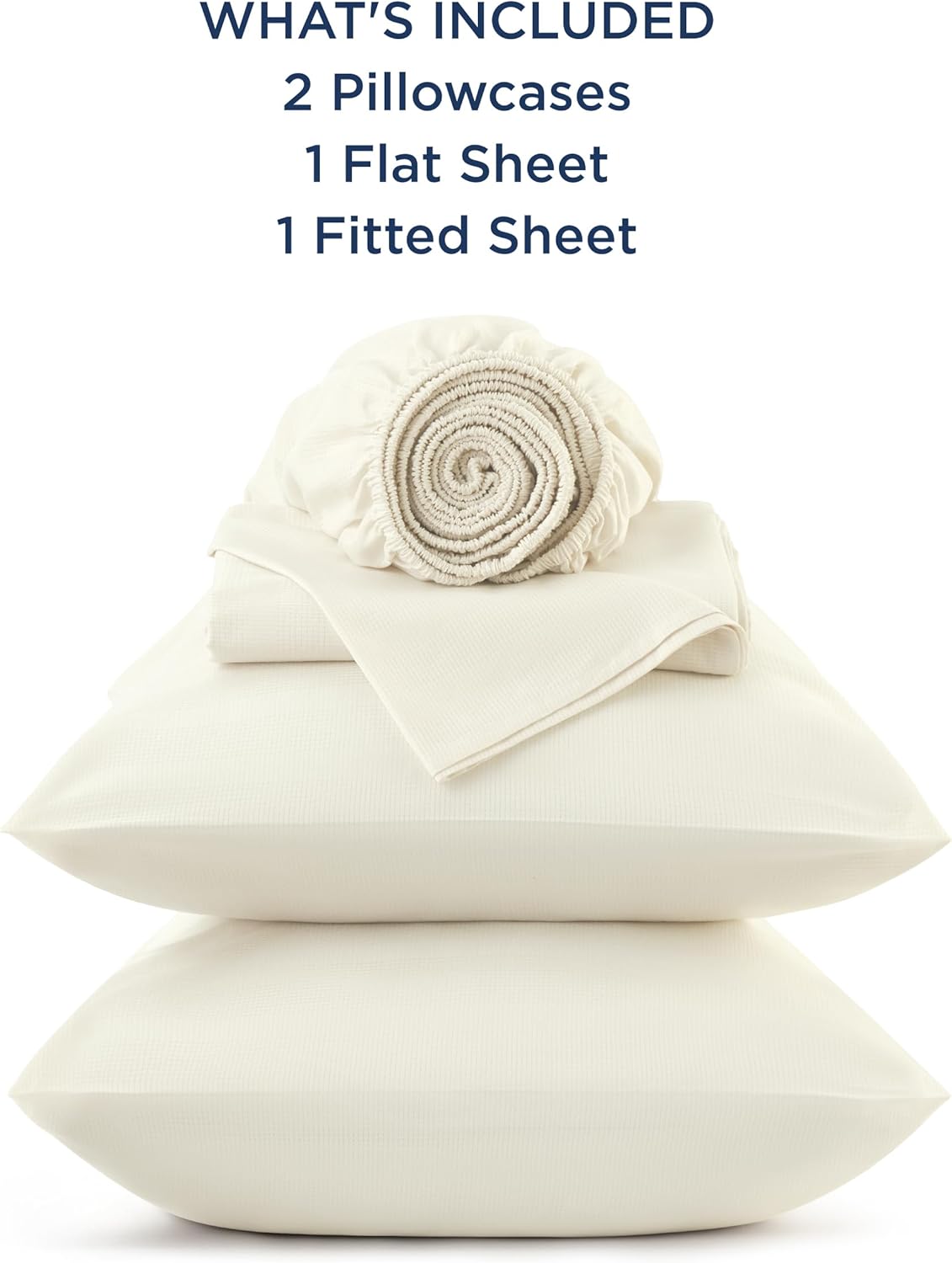

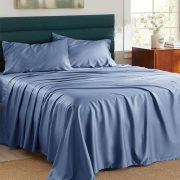
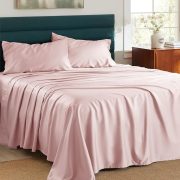

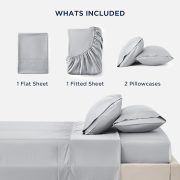
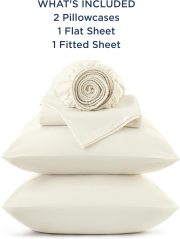
Tencel™ Lyocell Cotton Interwoven Flat Sheet Set:Precision Engineering Through Structured Fabric Strategy
In the contemporary bedding industry, fiber content alone no longer defines product value. Construction method matters equally — sometimes more.
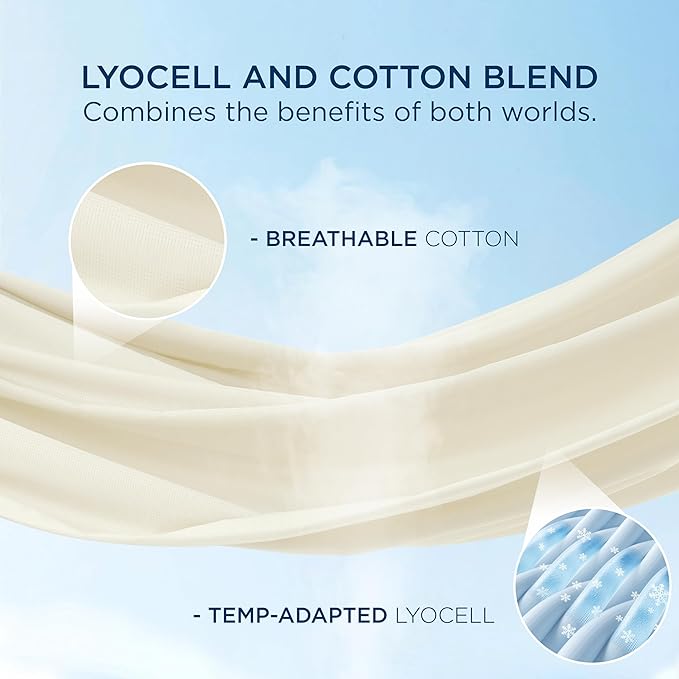
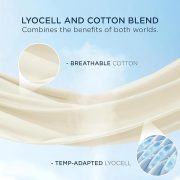
A Tencel™ Lyocell cotton flat sheet set built with interwoven construction is fundamentally different from a blended fabric. The distinction is technical, tactile, and commercial.
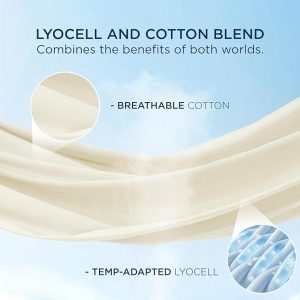
Lyocell-cotton blends mix fibers within the same yarn before weaving.
Interwoven construction keeps Tencel™ Lyocell and cotton as separate yarn systems — typically one in warp and one in weft — crossing at precise intervals on the loom.
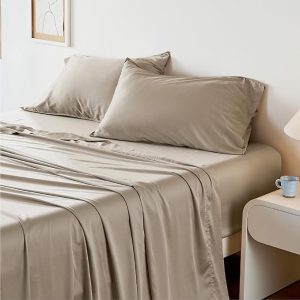
This structural decision transforms performance, stability, and scalability.
Understanding Interwoven Construction
In an interwoven Tencel™ Lyocell cotton fabric:
Cotton yarns may form the warp, providing tensile strength and dimensional control.
Tencel™ Lyocell yarns may form the weft, delivering surface smoothness and cooling hand feel.
Or the configuration may be reversed depending on design goals.
Unlike blended yarns, where fiber properties are averaged, interwoven fabrics allow each material to maintain its structural integrity. Cotton contributes firmness and seam durability. Lyocell provides drape, fluidity, and moisture regulation.
The result is not compromise. It is engineered balance.
For a flat sheet — the most exposed and tactile component of a bedding set — this precision matters.
Performance Differentiation
Blended constructions often soften the identity of both fibers. Interwoven construction preserves it.
With cotton anchoring structural stability, shrinkage control improves. Stitch integrity strengthens. Fabric recovery after washing remains more predictable.
With Tencel™ Lyocell running in the opposing direction, the surface retains a cool, refined smoothness. The contact layer feels elevated without becoming overly slippery.
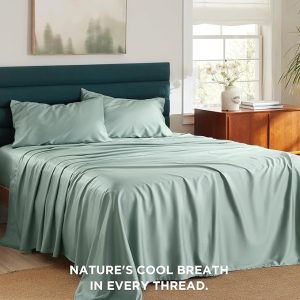
In practical use, this translates into:
Improved drape without collapse
Cooling sensation without excessive sheen
Strength without stiffness
Softness without fragility
Interwoven fabric does not dilute fiber properties. It stages them in dialogue.
Why Interwoven Matters for Scale Production
From a manufacturing standpoint, interwoven construction requires careful yarn alignment and tension calibration.
Warp preparation must account for cotton’s lower elongation rate.
Weft insertion must maintain lyocell’s smoother filament behavior.
Because the yarn systems remain distinct, weaving consistency becomes critical. This is precisely why scale production — minimum 2000 meters per fabric — is not optional.
Short runs increase loom recalibration frequency. Each reset introduces risk in:
Tension alignment
Surface uniformity
Density balance
A continuous 2000-meter run stabilizes the loom environment. Yarn behavior normalizes. Finishing becomes standardized.
Scale is not merely economic. It is technical insurance.
Single-Color Discipline
Interwoven fabrics display color differently from blended fabrics.
Because warp and weft may absorb dye at slightly different rates, subtle tonal depth can appear even in solid shades. This visual dimension is a strength — but only when controlled.
Multiple small-batch color programs amplify shade deviation risk. Each new dye lot must balance absorption across two fiber systems.
By committing to a single core color per 2000-meter production run, brands reduce:
Lab dip repetition
Cross-batch inconsistency
Inventory fragmentation
Waste from rejected lots
Neutral tones work best within this framework:
Soft white
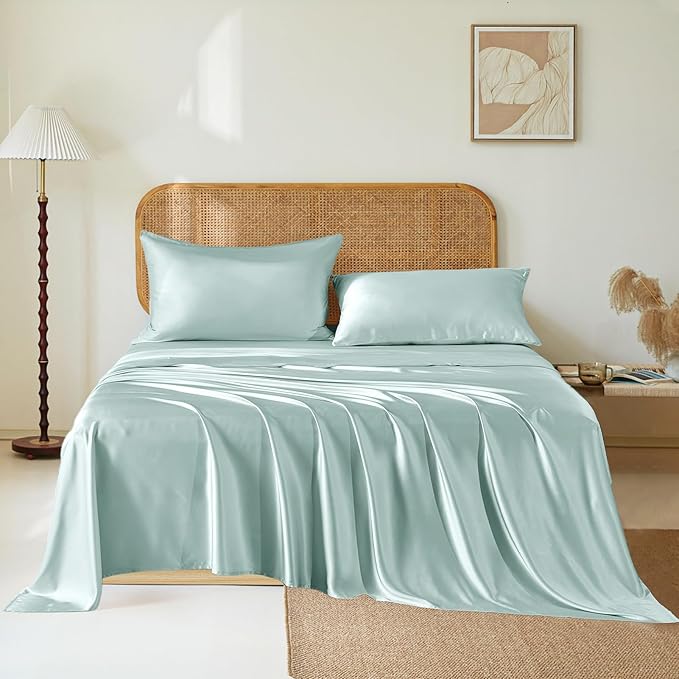
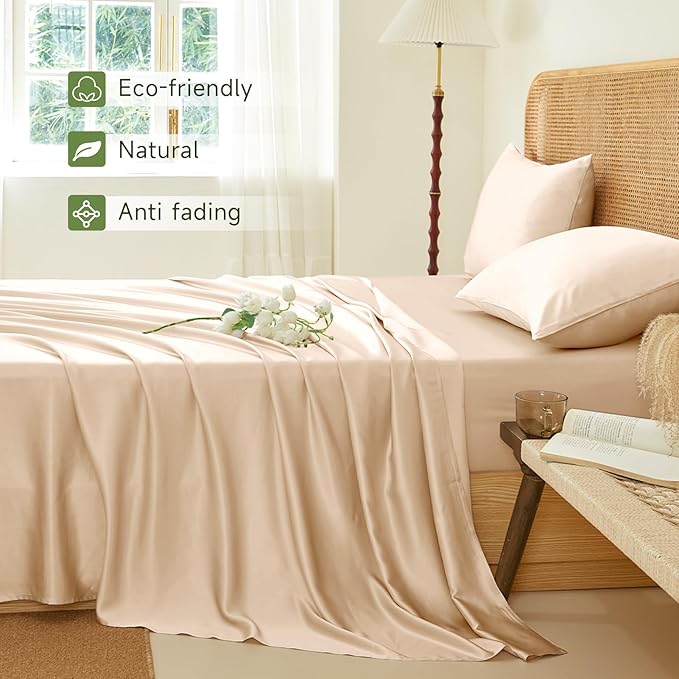
Warm sand
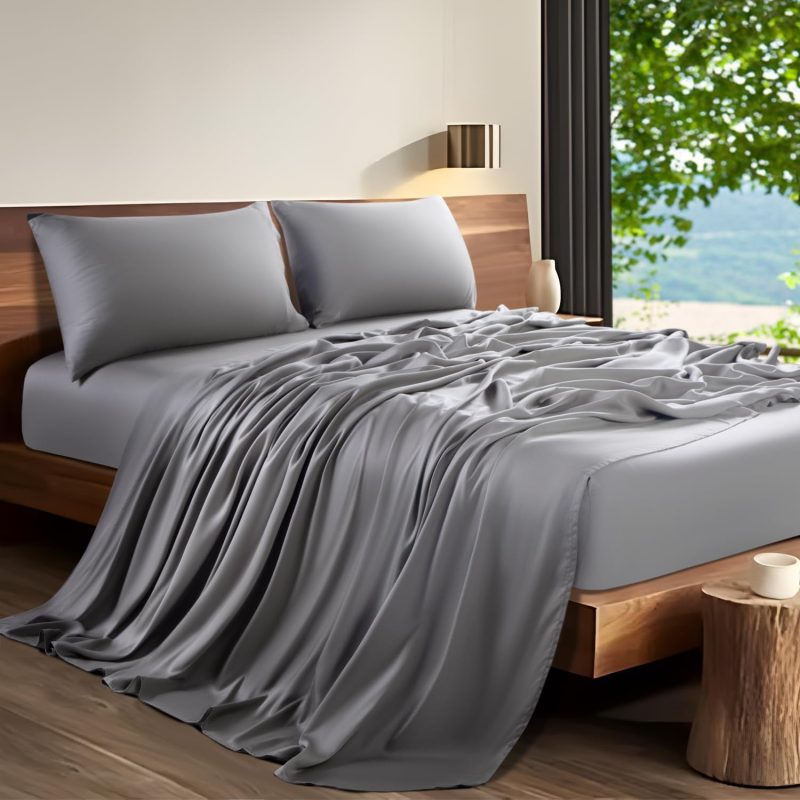
Muted grey
Understated taupe
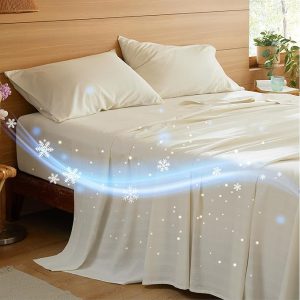
These shades complement the refined luster of lyocell while stabilizing cotton’s matte structure.
In interwoven construction, restraint enhances sophistication.
Single-Pattern Strategy
Print development on interwoven fabric adds complexity.
Because cotton and lyocell react differently to dye saturation, detailed multicolor prints increase registration challenges.
A single-pattern strategy — limited to one commercially stable design per 2000-meter commitment — protects consistency.
Ideal pattern characteristics:
Low color contrast
Medium-scale repeat
Seasonally neutral motif
Minimal over-saturation
Subtle stripe, tonal botanical, or restrained geometric structures integrate seamlessly with interwoven depth.
Excessive variation creates operational instability.
Focused execution builds repeatable quality.
Weave Selection
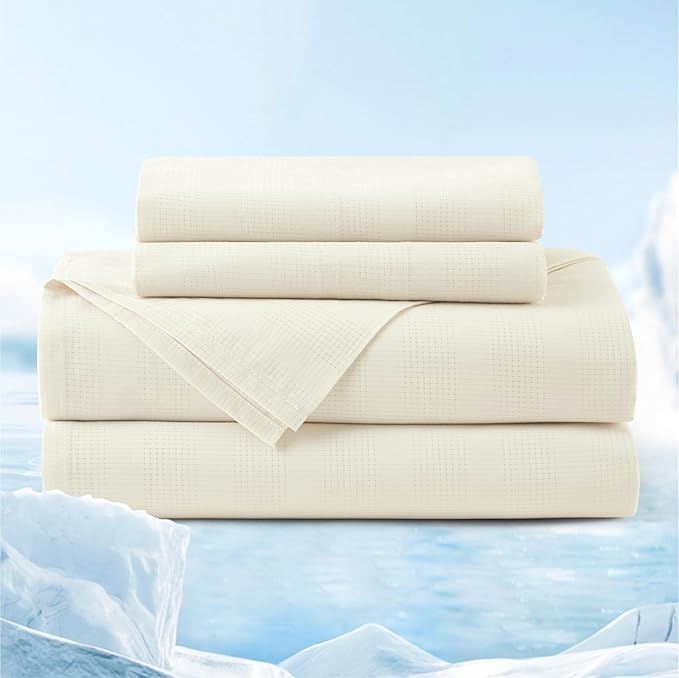
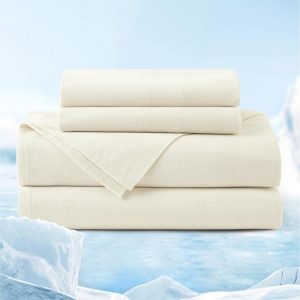
Interwoven Tencel™ Lyocell cotton flat sheet sets typically perform best in percale or controlled sateen constructions.
Percale emphasizes breathability and structural clarity.
Sateen highlights lyocell smoothness and gentle sheen.
However, sateen requires careful warp-dominant planning to prevent overexposure of cotton yarn.
For large 2000-meter runs, percale structures often deliver superior dimensional stability and lower snag sensitivity.
Consistency across long runs is easier to maintain when weave geometry is balanced and repeatable.
Cost Modeling Through Fabric Discipline
Fragmented small-batch programs inflate:
Warp setup waste
Sampling duplication
Quality inspection cycles
Inventory holding costs
A disciplined 2000-meter interwoven program allows:
Bulk yarn procurement negotiation
Optimized warping efficiency
Reduced finishing recalibration
Lower per-meter overhead
When mills operate continuously rather than intermittently, efficiency improves naturally.
Scale strengthens supplier relationships. Suppliers prioritize predictable, high-volume partners.
Predictability lowers risk premium.
Inventory Stability
Retail overextension into excessive colorways leads to SKU stagnation.
Interwoven Tencel™ Lyocell cotton fabric performs best when positioned as a core collection — not a seasonal experiment.
One color.
One pattern at most.
Continuous replenishment.
Instead of distributing 800 meters across four shades, concentrate 2000 meters into one stable SKU.
Sell-through improves. Reorders simplify. Forecasting stabilizes.
Operational clarity reduces markdown pressure.
Durability and Wash Performance
Interwoven construction enhances durability compared to blended yarn systems.
Cotton warp threads maintain tensile integrity under repeated laundering. Lyocell weft threads preserve surface softness.
Because fibers are not mixed within the same yarn, abrasion distributes differently across the fabric plane.
The result is:
Reduced pilling risk
Improved seam strength
Controlled shrinkage
Long-term surface smoothness
However, these benefits materialize fully only when weaving tension remains stable across extended production.
Again, scale reinforces quality.
Sustainability Alignment
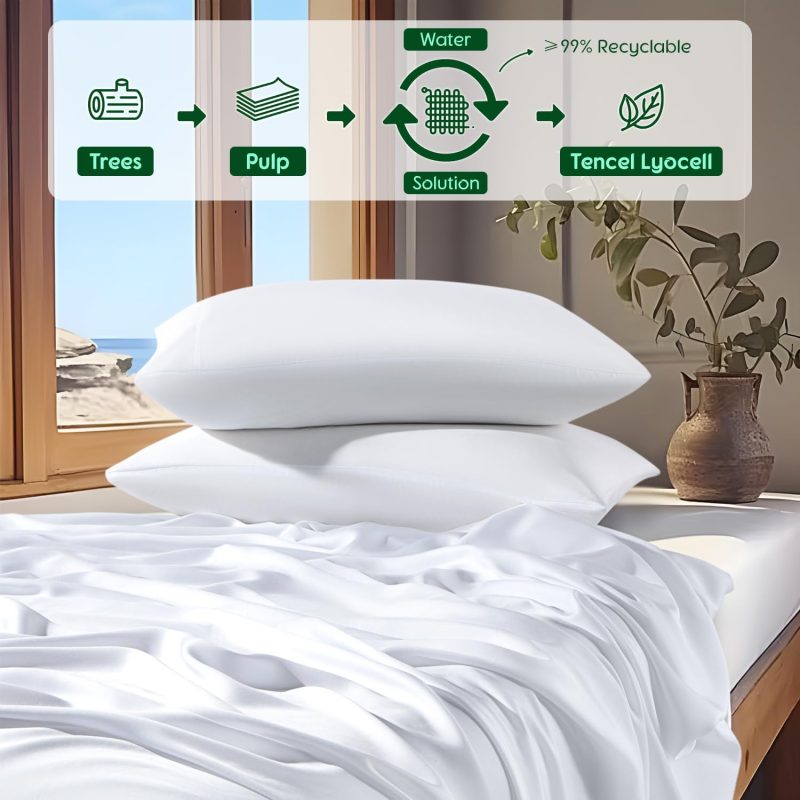
Tencel™ Lyocell is recognized for its closed-loop production system. Cotton, when responsibly sourced, contributes natural familiarity.
Interwoven construction avoids chemical fiber bonding stages sometimes required in blends. Yarn systems remain mechanically integrated through weaving alone.
Large, continuous 2000-meter runs further reduce environmental waste by minimizing dye machine changeovers and discarded partial lots.
Sustainability is not achieved through slogans. It emerges from operational efficiency.
Brand Identity Through Structural Clarity
In an overcrowded bedding market, complexity often masquerades as innovation.
True refinement is controlled.
An interwoven Tencel™ Lyocell cotton flat sheet set signals technical confidence. It communicates that material performance has been engineered intentionally rather than blended for convenience.
Paired with:
Single-color focus
Single-pattern restraint
2000-meter minimum production discipline
The product transitions from commodity to signature.
Luxury is increasingly defined by quiet precision.
Supply Chain Advantage
Long-term mill partnerships depend on mutual stability.
When brands commit to structured 2000-meter programs, mills allocate consistent loom time. Yarn sourcing stabilizes. Dye scheduling becomes efficient.
Short, fragmented orders force mills into reactive scheduling. Reactive systems produce variability.
Stability builds trust.
Trust builds priority access during capacity shortages.
In volatile global supply chains, priority matters.
Conclusion
A Tencel™ Lyocell cotton interwoven flat sheet set is not simply a fiber story.
It is a construction decision.
A production discipline.
A scale strategy.
By separating yarn systems rather than blending fibers, interwoven fabrics preserve the identity of each material. Cotton provides strength. Lyocell delivers cooling refinement. The loom unites them structurally.
But this technical advantage reaches its full potential only under disciplined execution:
Single-color production
Single-pattern limitation
Minimum 2000 meters per fabric
Continuous replenishment model
In an industry driven by excessive variation, clarity becomes competitive strength.
When fabric engineering, scale commitment, and restrained design converge, the result is more than a bedding set.
It is operational stability woven into every thread.
And in today’s bedding landscape, stability is the foundation upon which sustainable growth is built.
Reviews
There are no reviews yet.