

























Winter Warmth, Engineered with Discipline:Down Duvet Comforters from Nantong
A winter duvet comforter is not simply bedding.
It is insulation.
It is structure.
It is balance between loft and weight.
It is the quiet architecture of warmth.
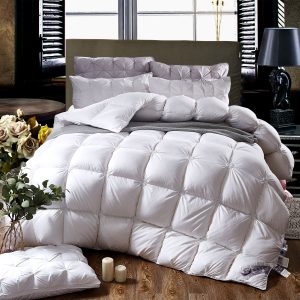
At first glance, a down comforter looks effortless — white, voluminous, cloud-like.
But true performance is invisible.
It lies inside the filling ratio.
Inside the density of the fabric weave.
Inside the stitching structure that controls migration.
Inside the discipline of washing, sorting, and filling.
We are a home textile factory based in Nantong, Jiangsu, China — one of the most concentrated bedding manufacturing regions in the country. Within this region, weaving mills, down processing facilities, stitching workshops, and finishing units operate in coordination.
This ecosystem allows winter duvet production to be systematic rather than improvised.
Down Comforters: Precision Behind Softness
A winter comforter must achieve three conditions simultaneously:
Thermal insulation
Air circulation
Structural stability
Too dense, and it feels heavy.
Too light, and warmth escapes.
Poor stitching, and filling shifts.
Low-quality shell fabric, and feathers leak.
Each component requires control.
Fabric: Down-Proof Engineering
The shell fabric is the first barrier.
For our standard winter duvet comforter, we use:
100% cotton, down-proof
Thread count: 133 x 100
This density is deliberate.
The weave must be tight enough to prevent feather leakage, yet breathable enough to allow moisture exchange.
Down-proof cotton is not ordinary cotton.
It undergoes additional finishing processes to minimize pore gaps. The balance between yarn fineness and weaving density determines durability.
Beyond 133×100 cotton, additional fabric options are available:
High-thread-count cotton
Cotton sateen
Brushed cotton
Cotton-poly blends
Microfiber down-proof shells
Jacquard cotton shells
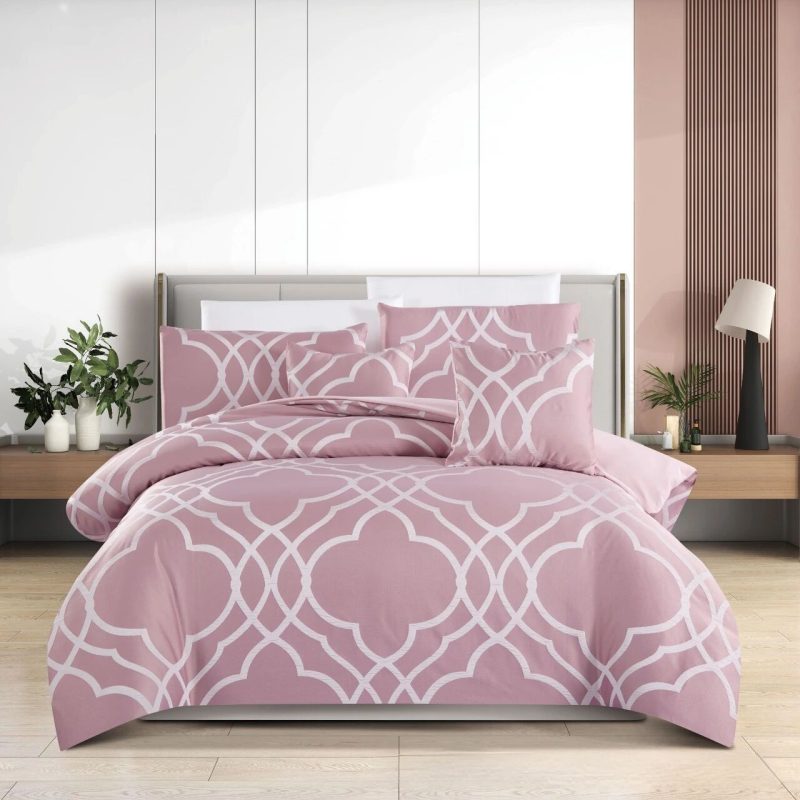
Printed cotton shells
Fabric selection influences not only performance, but also positioning.
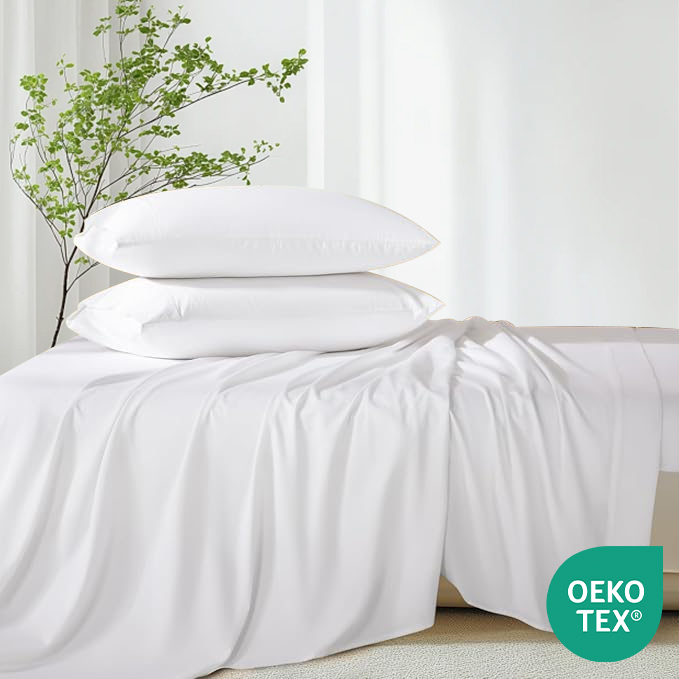
Hotel programs often prefer crisp white down-proof cotton.
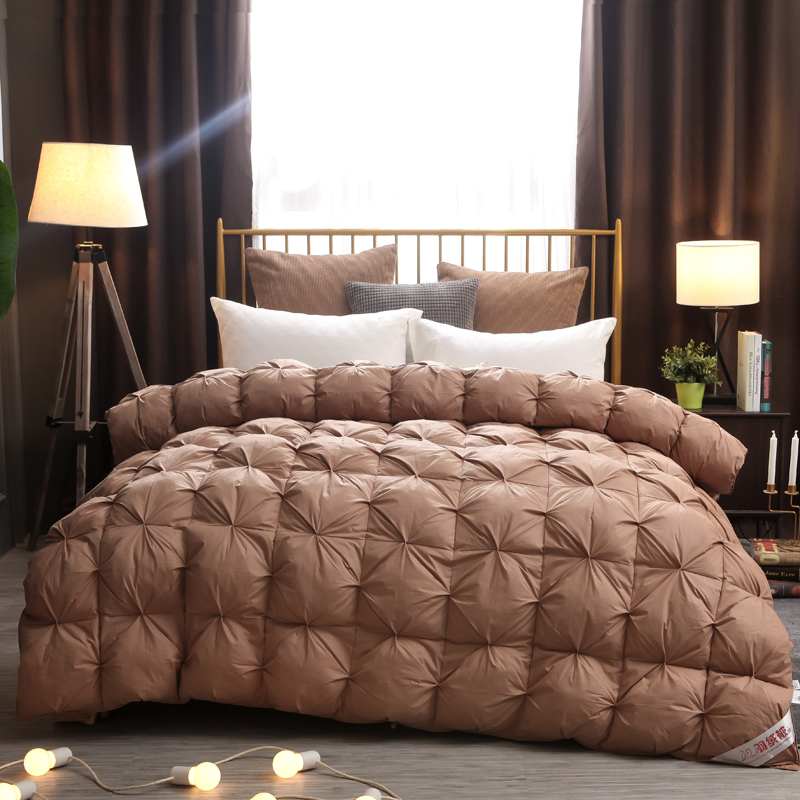
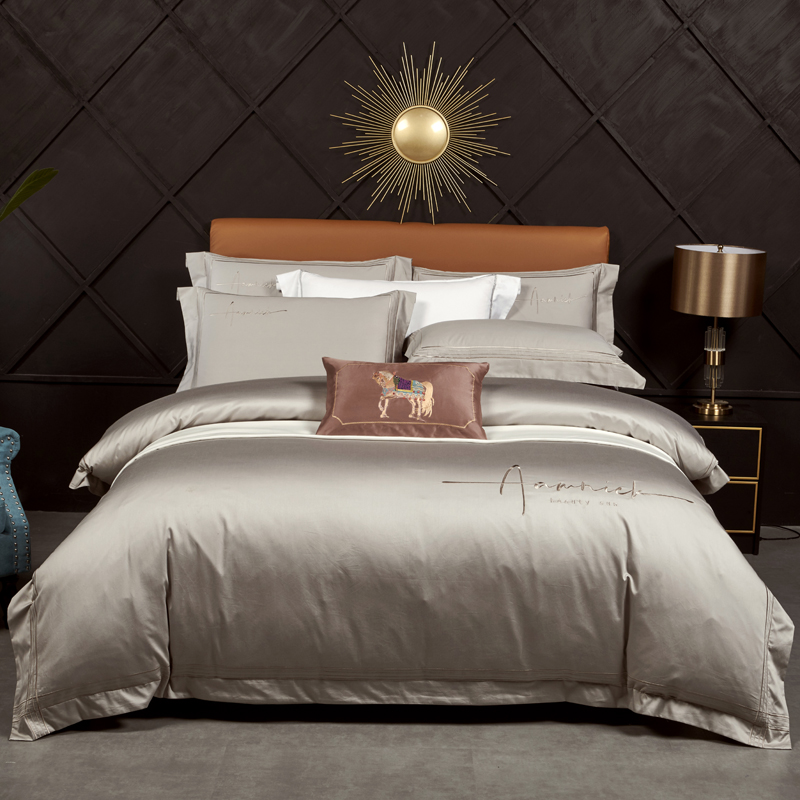
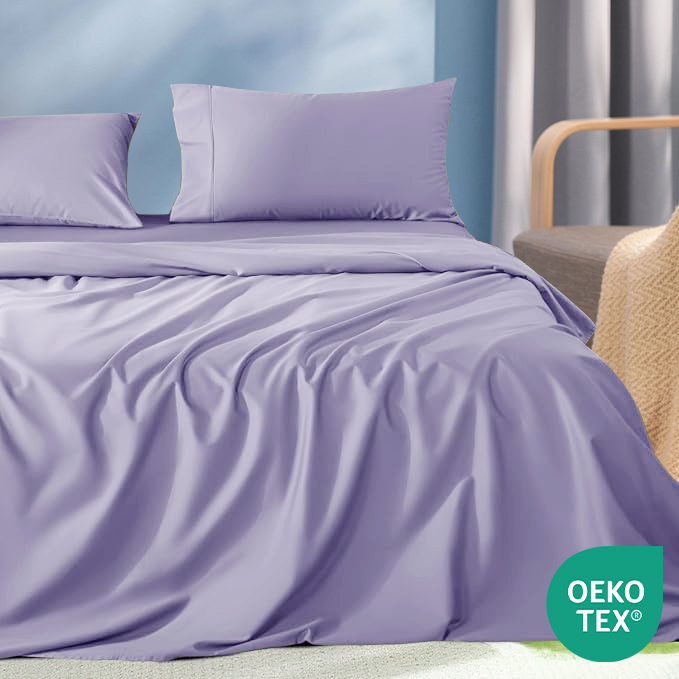
Retail winter collections may introduce solid seasonal colors.
Premium lines sometimes choose sateen for subtle sheen.
Color and Print Possibilities
While white remains classic, winter comforters are no longer restricted to plain aesthetics.
Available options include:
Solid colors
Custom-dyed shades
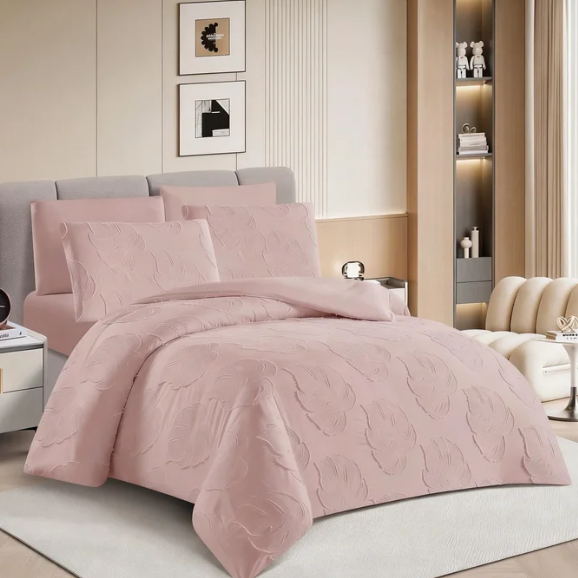
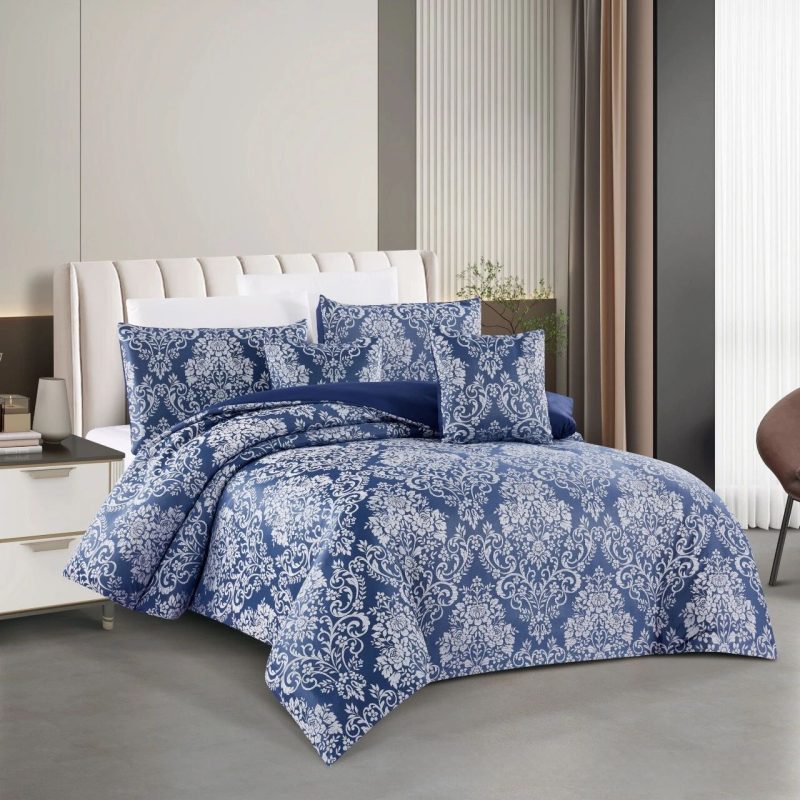
Printed outer shells
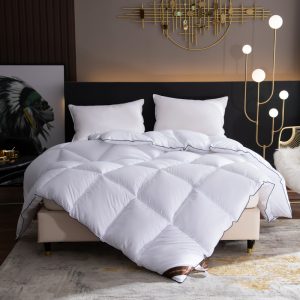
Contrast piping edges
Color customization follows structured dye planning. Defined meterage per shade ensures consistent color matching and stable production efficiency.
When each color reaches practical weaving and dyeing volume, quality control becomes precise and predictable.
Filling: The Core of Warmth
Inside the comforter lies the essential thermal element.
Standard winter filling specification:
75% waterfowl feathers
25% waterfowl down
This ratio provides loft with structural resilience.
Feathers add body and support.
Down clusters add insulation and softness.
Pure down delivers higher loft but may reduce structural stability in certain weight categories. Feather-down blends offer durability while maintaining warmth.
Filling weight is fully customizable.
Winter climates vary significantly across regions. Loft requirements differ. Hospitality programs may require standardized GSM; retail programs may define multiple warmth levels.
Available fill weight customization includes:

Light winter weight
Standard winter weight
Heavy winter weight
Extra loft cold-climate weight
Weight is calibrated according to size specification and thermal expectations.
Down Processing and Cleanliness
Waterfowl feathers and down must be properly cleaned, sterilized, and sorted.
Odor control, moisture level, and dust removal are essential.
Cleanliness level impacts both comfort and long-term performance.
Our production system ensures:
High-temperature washing
Sterilization
Moisture control
Dust extraction
Fill power consistency monitoring
Sustainability considerations are integrated into sourcing and processing.
The result is filling that maintains loft without excessive odor or clumping.
Stitching Technique: Structural Discipline
The stitching technique defines shape retention.

Common winter constructions include:
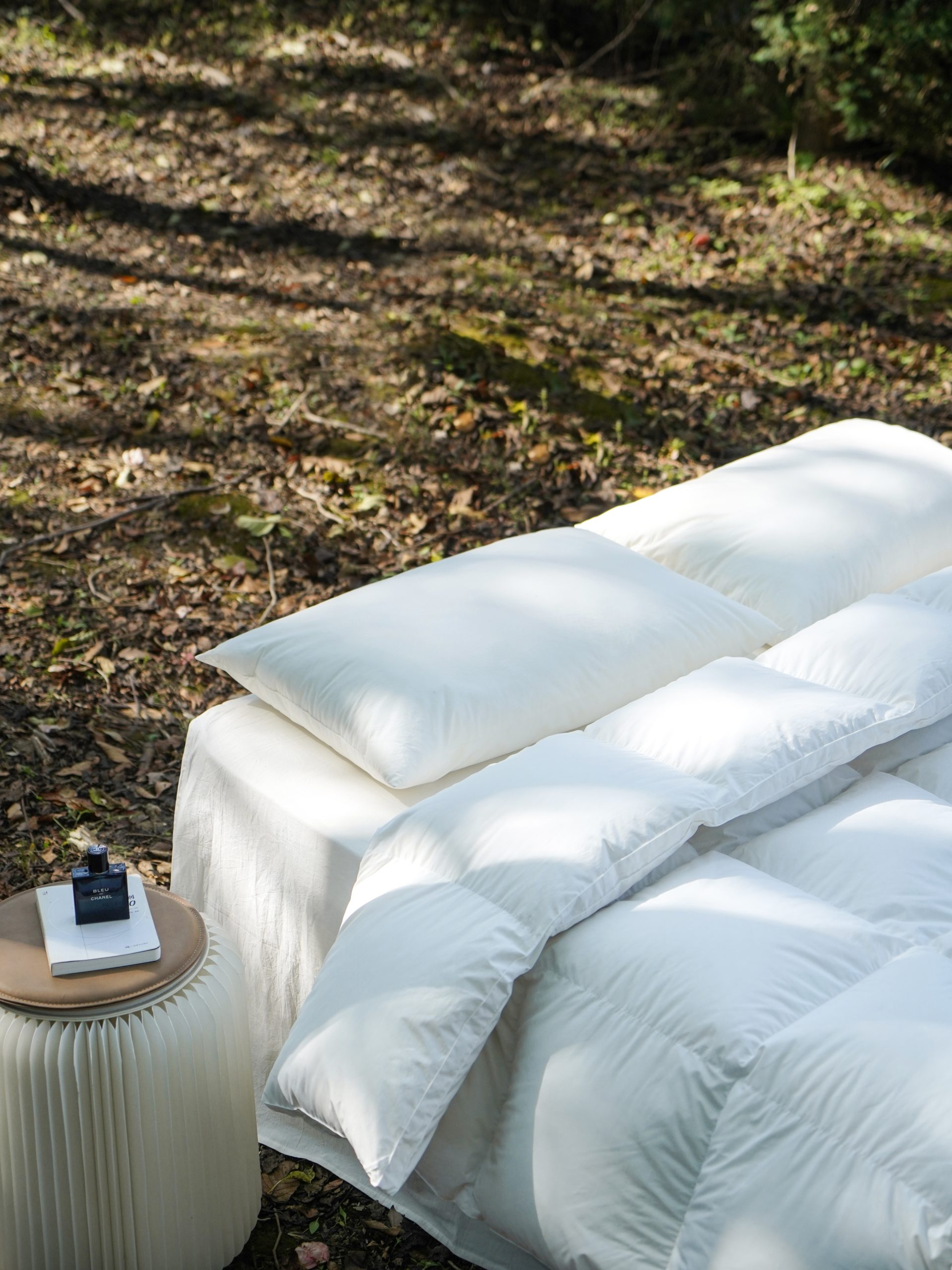
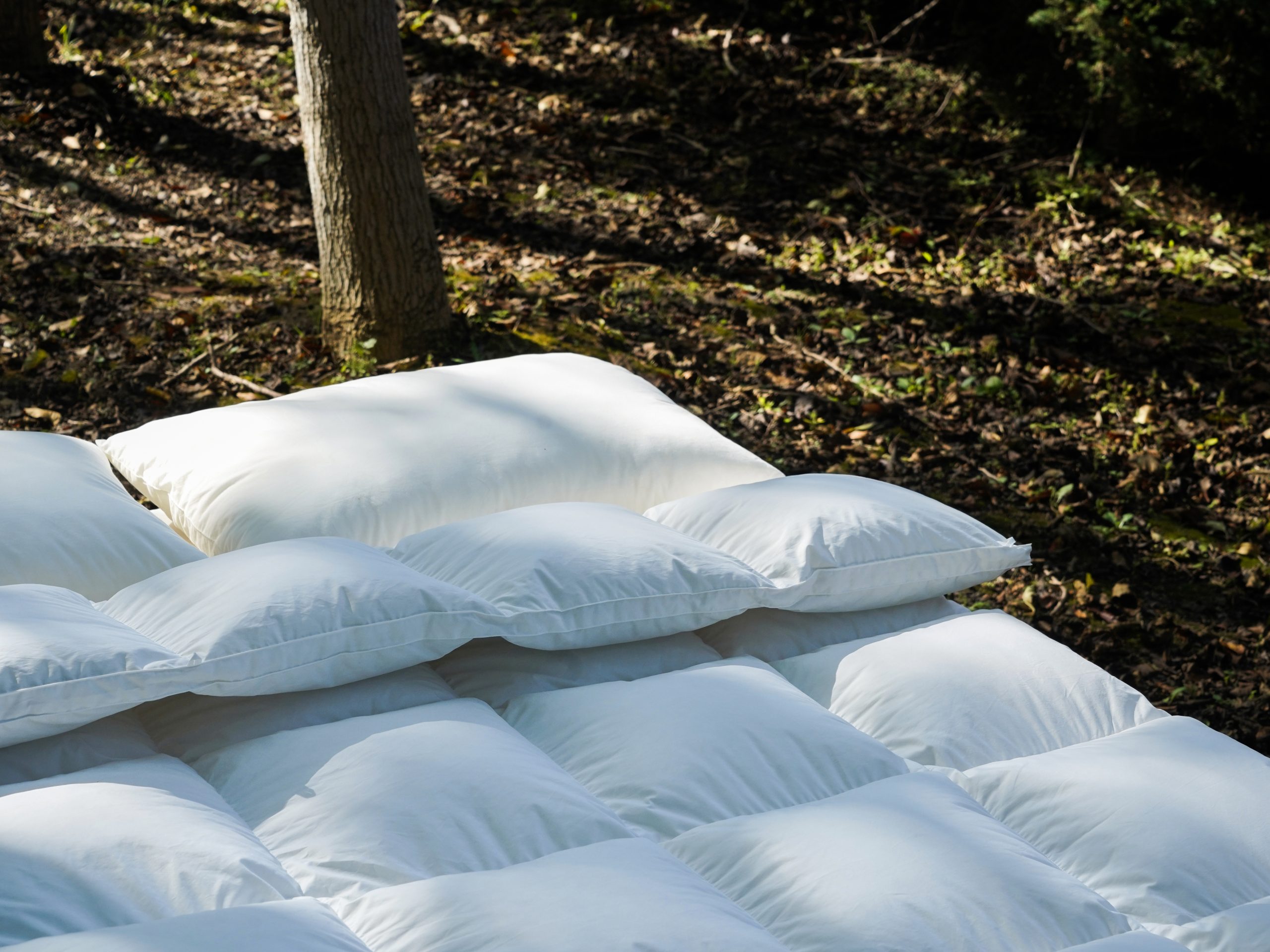
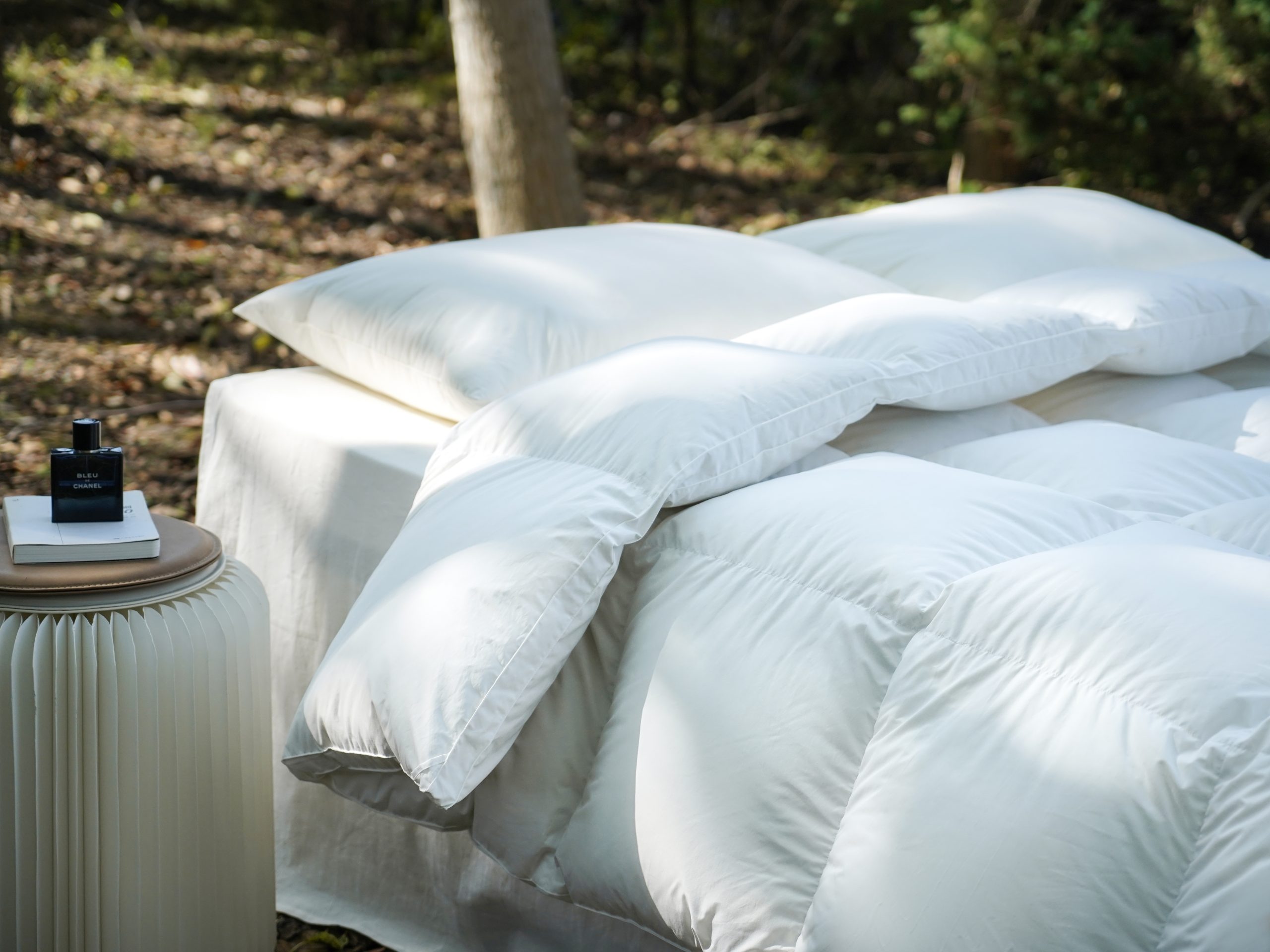
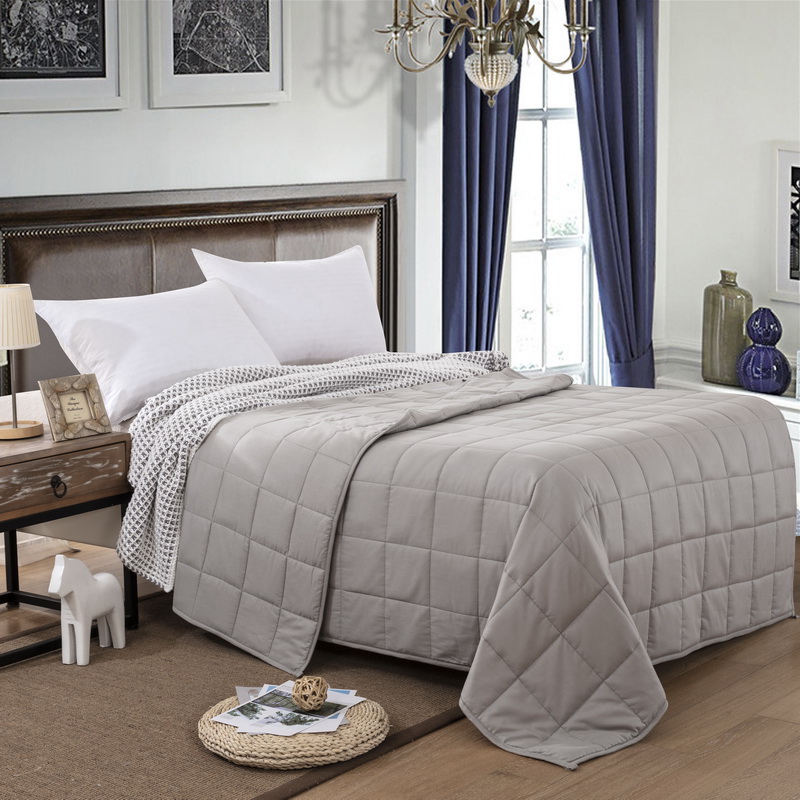
Box stitching
Baffle box construction
Channel stitching
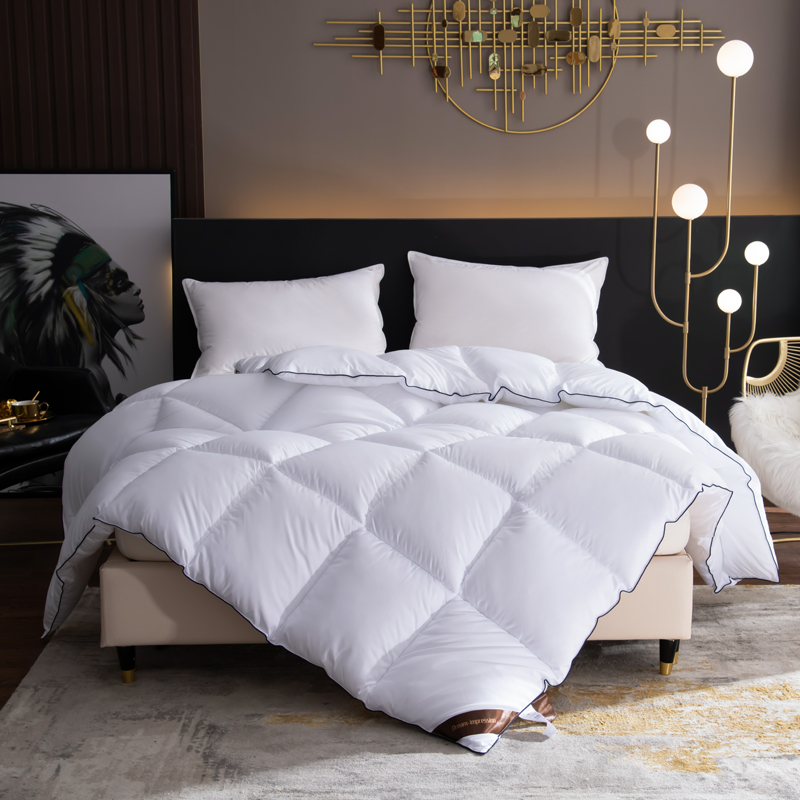
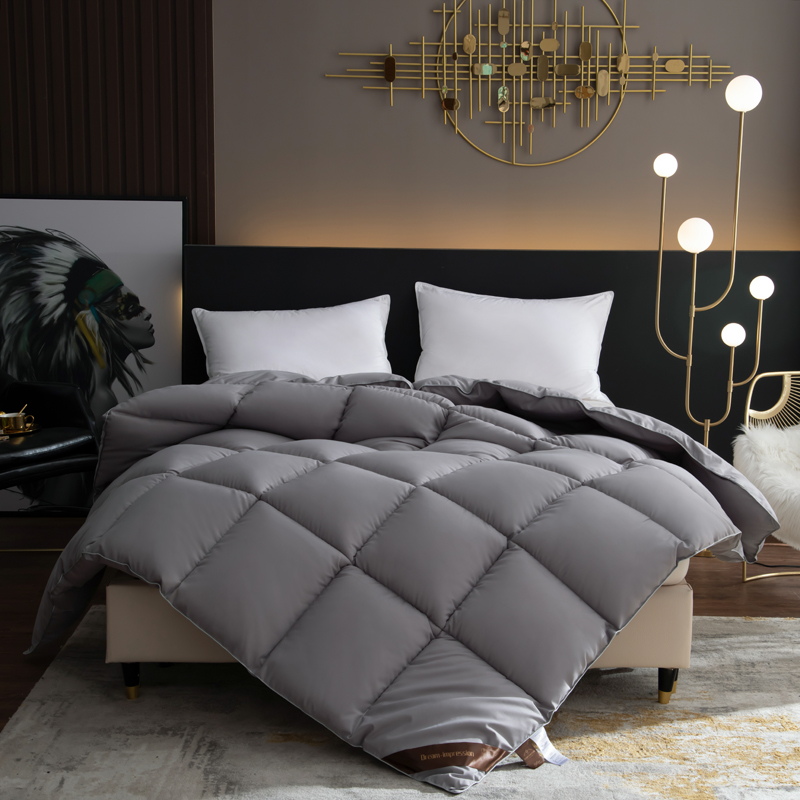
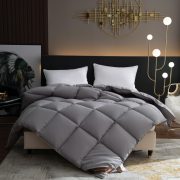
Diamond stitching
Each construction controls filling distribution differently.
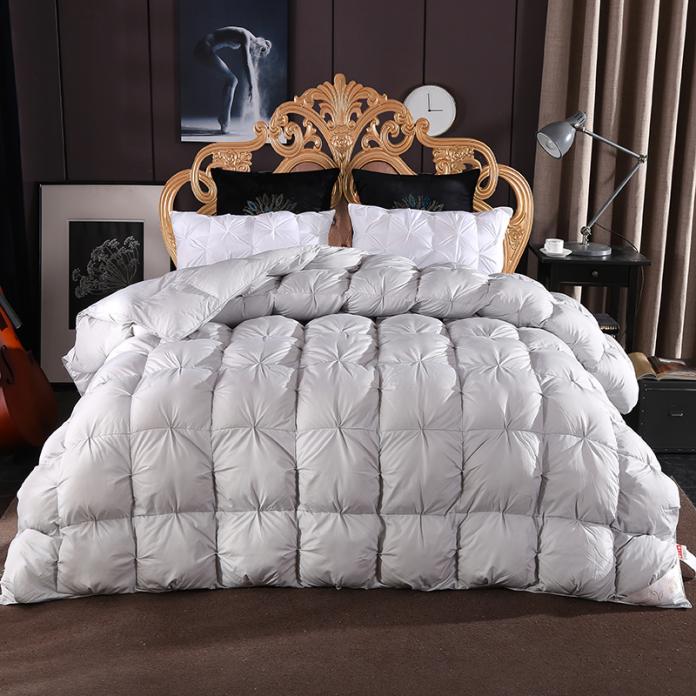
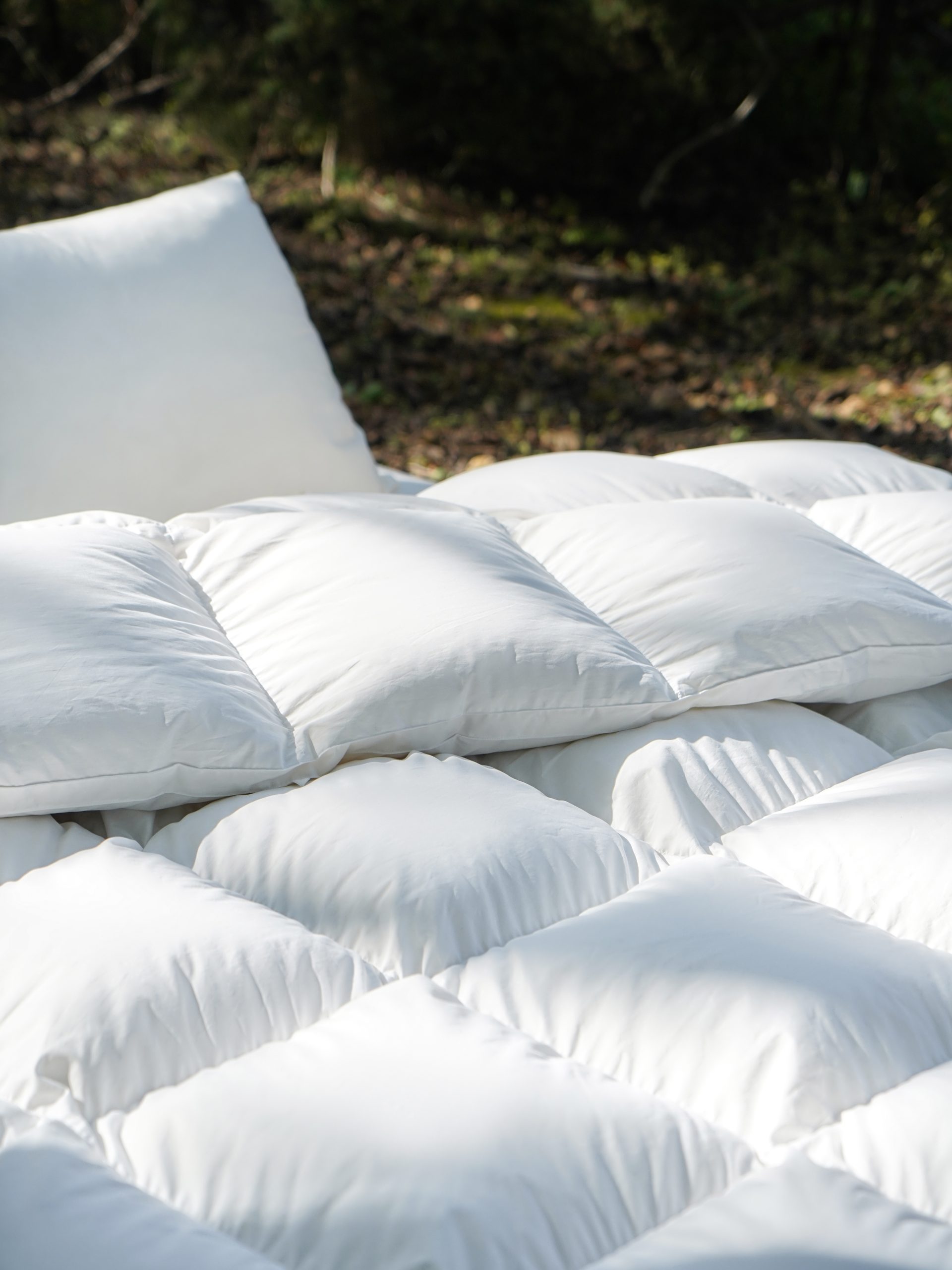
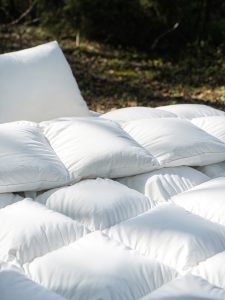
Box stitching creates contained compartments, reducing migration.
Baffle box allows higher loft while maintaining distribution.
Channel stitching offers streamlined appearance.
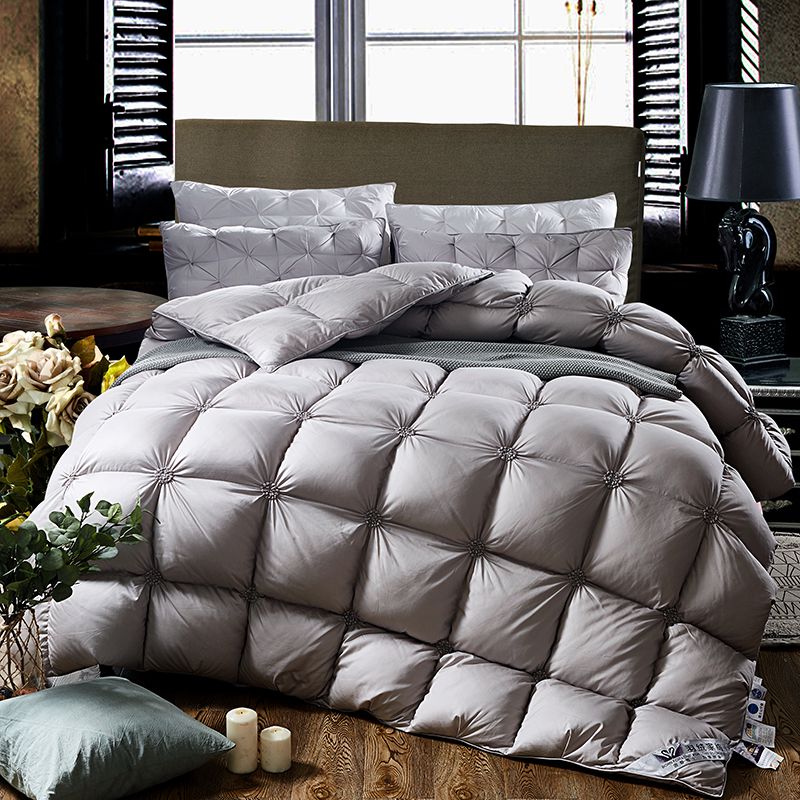
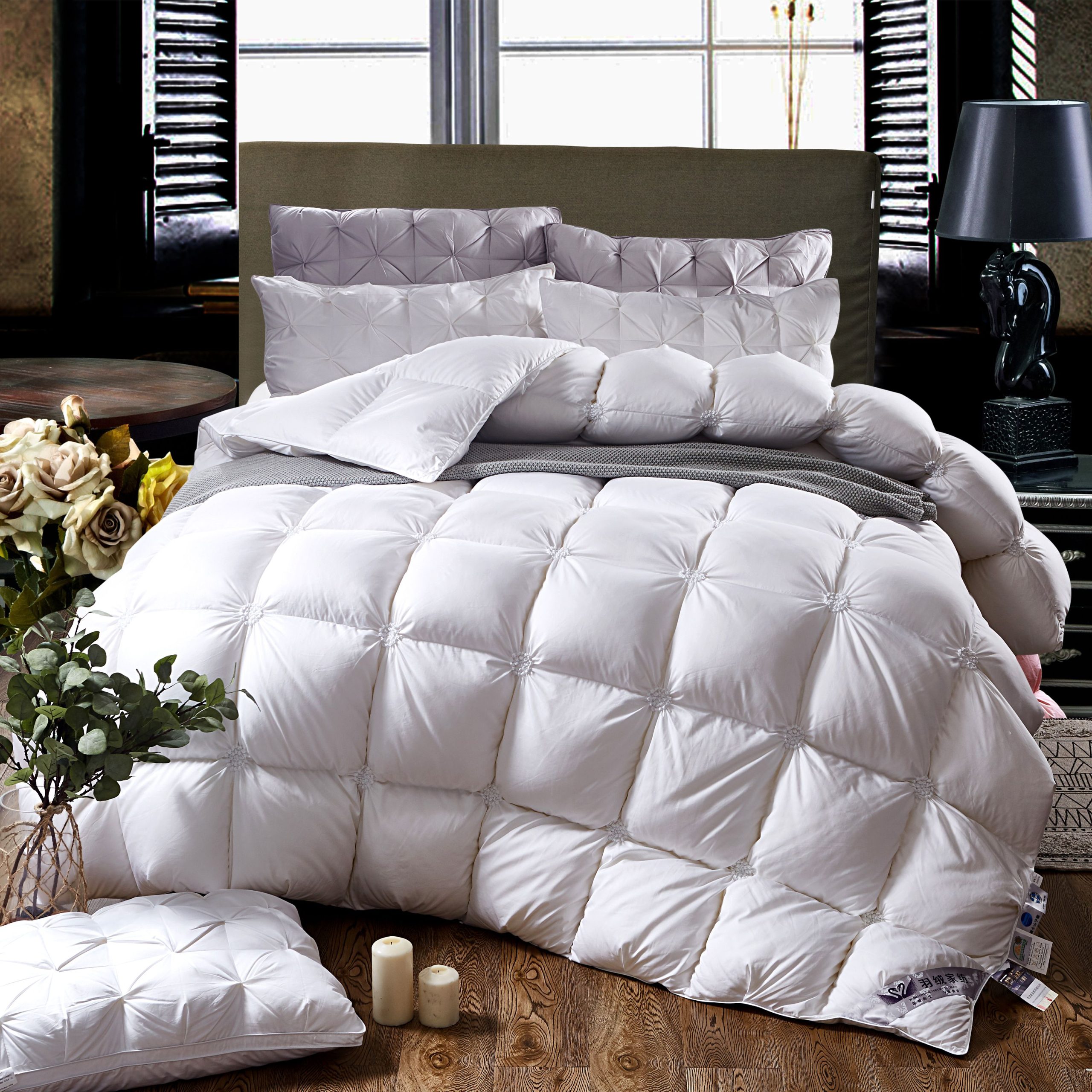
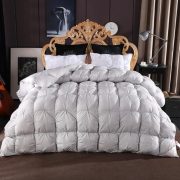
Decorative diamond stitch enhances visual geometry.
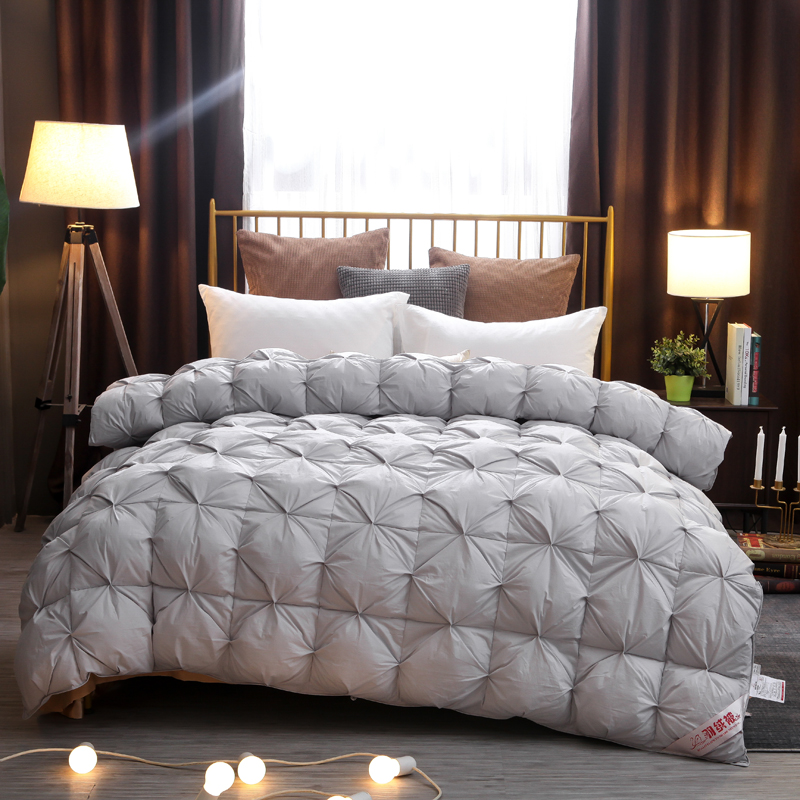
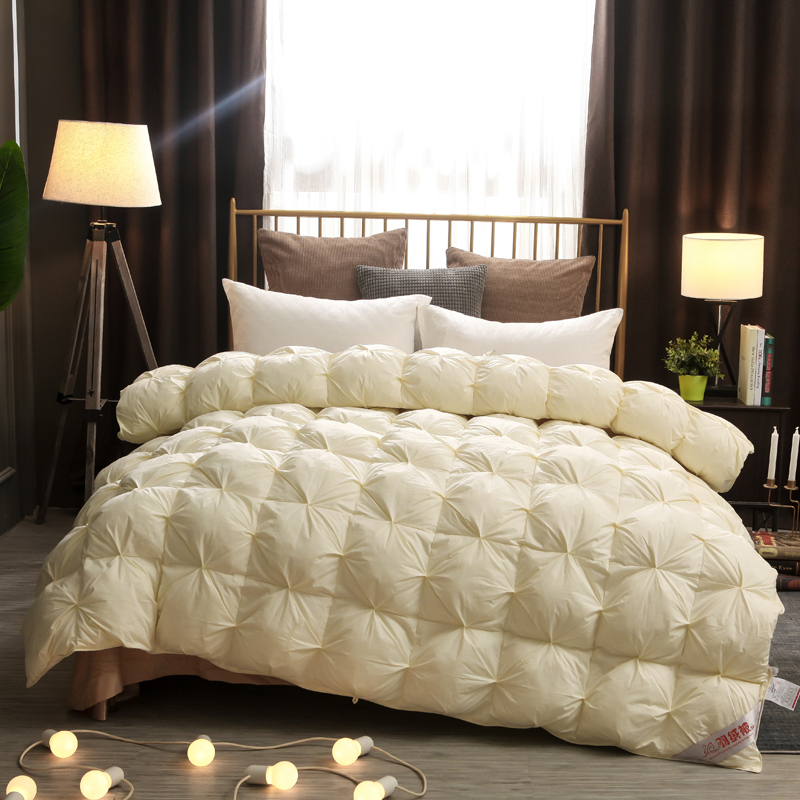
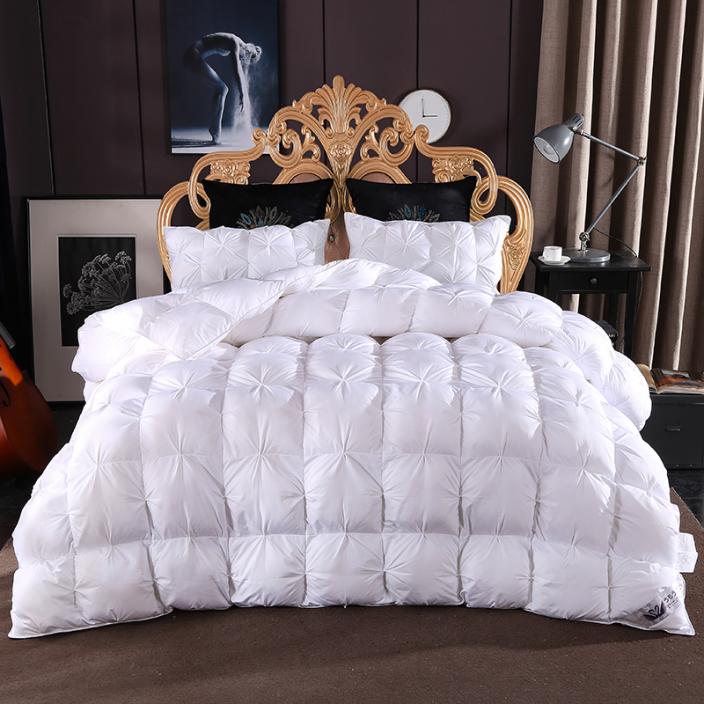
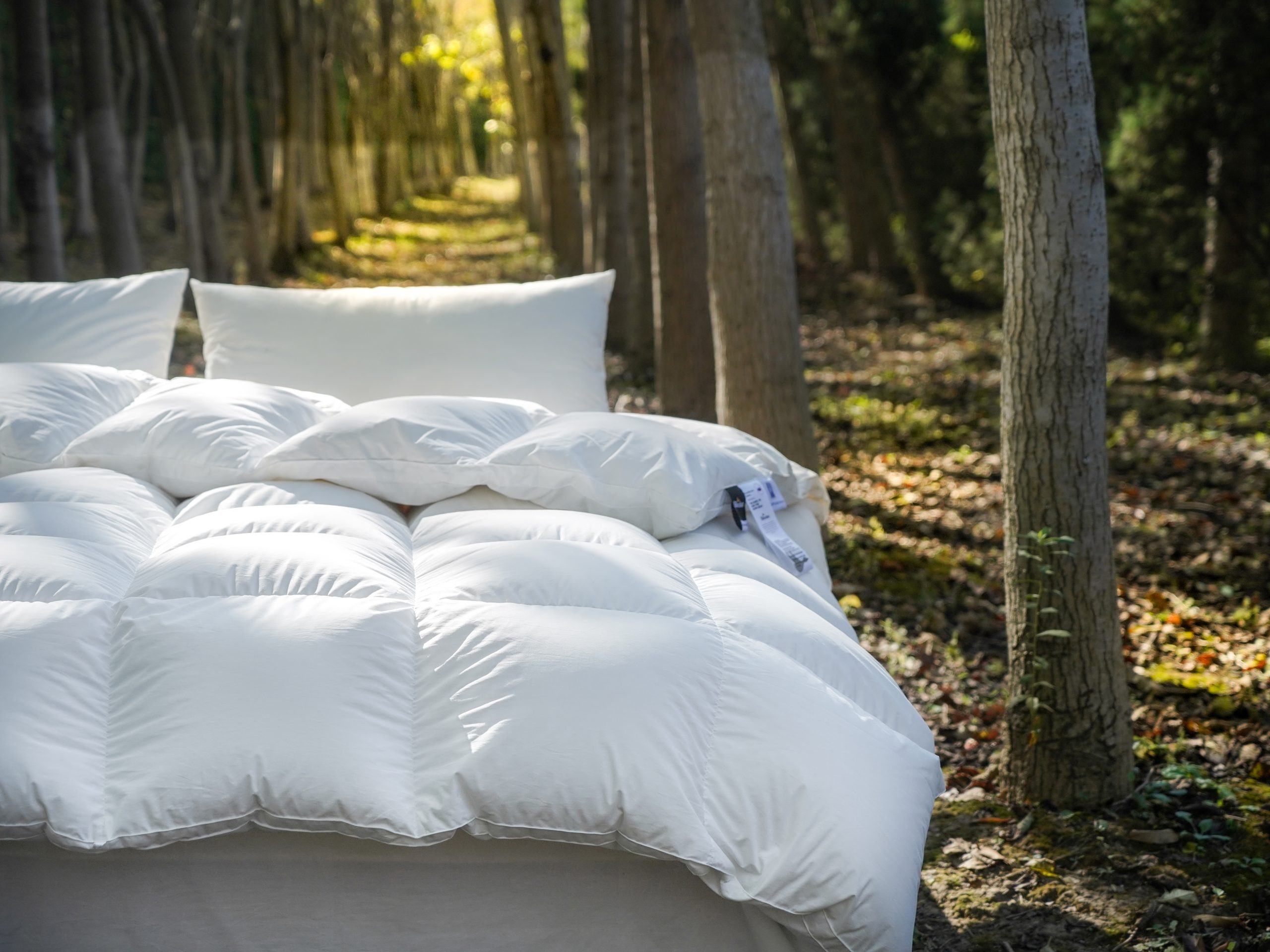
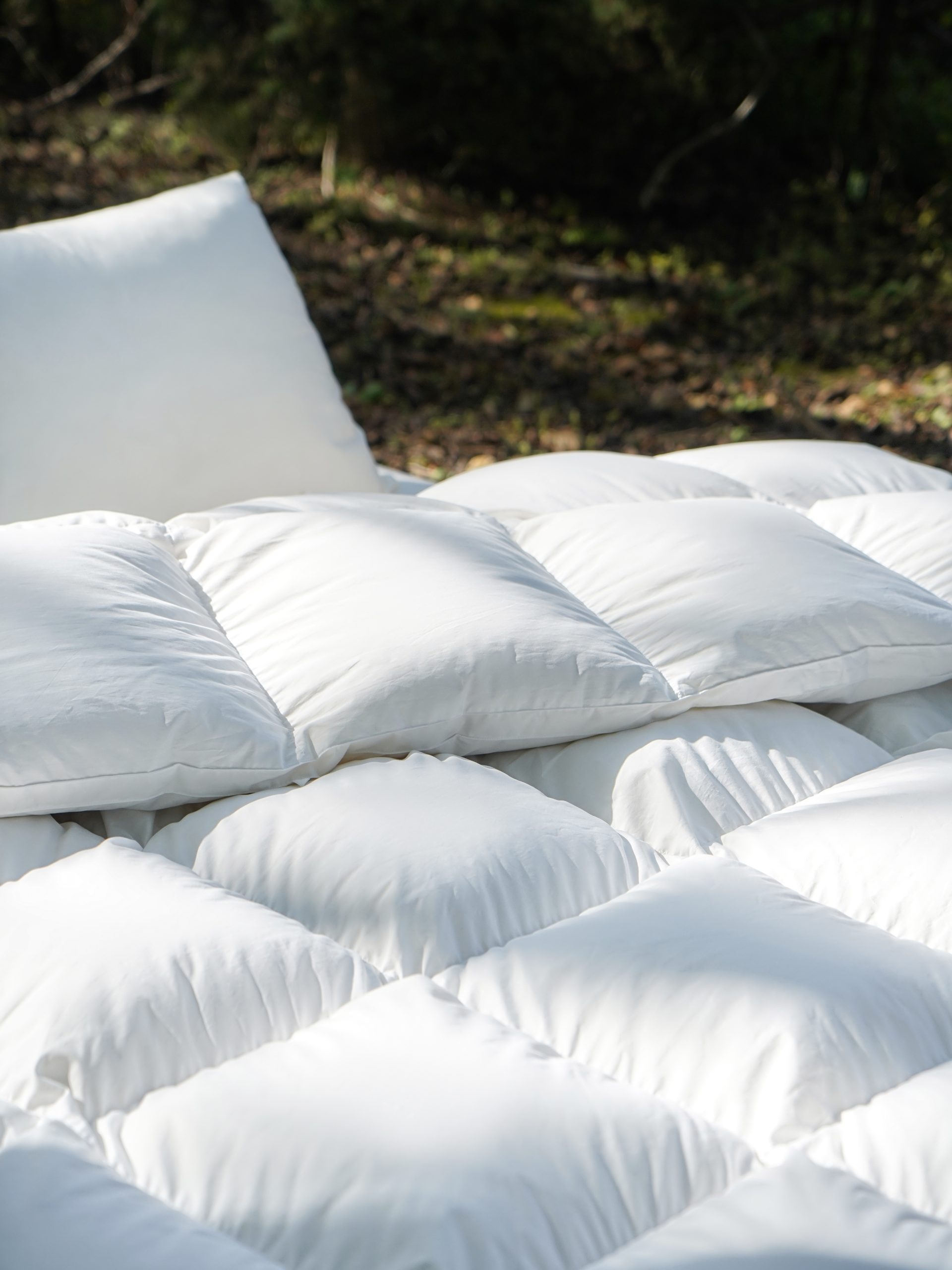
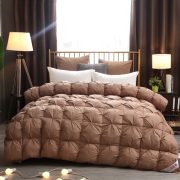
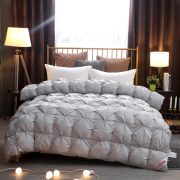
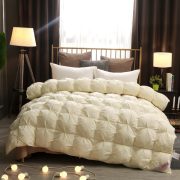
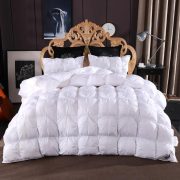
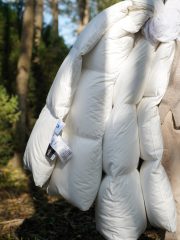
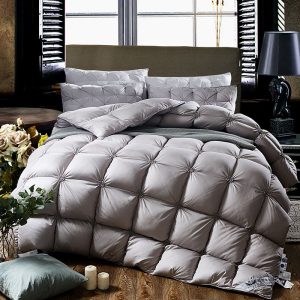
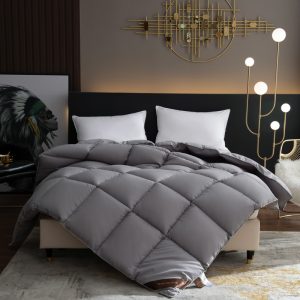
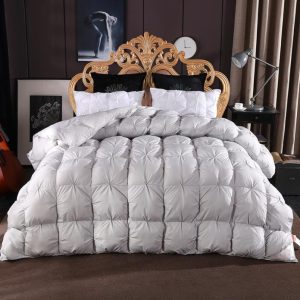
In the referenced images, structured box patterns provide balanced loft and clear visual segmentation.
The goal is uniform thickness across the entire comforter.
Poor stitching leads to cold spots.
Precision stitching preserves warmth integrity.
Hand-Finished Details

Although large-scale production is structured, final finishing includes manual inspection and trimming.
Edge seams are reinforced.
Thread ends are checked.
Filling distribution is adjusted before final closure.
Hand inspection ensures that loft remains even before packaging.
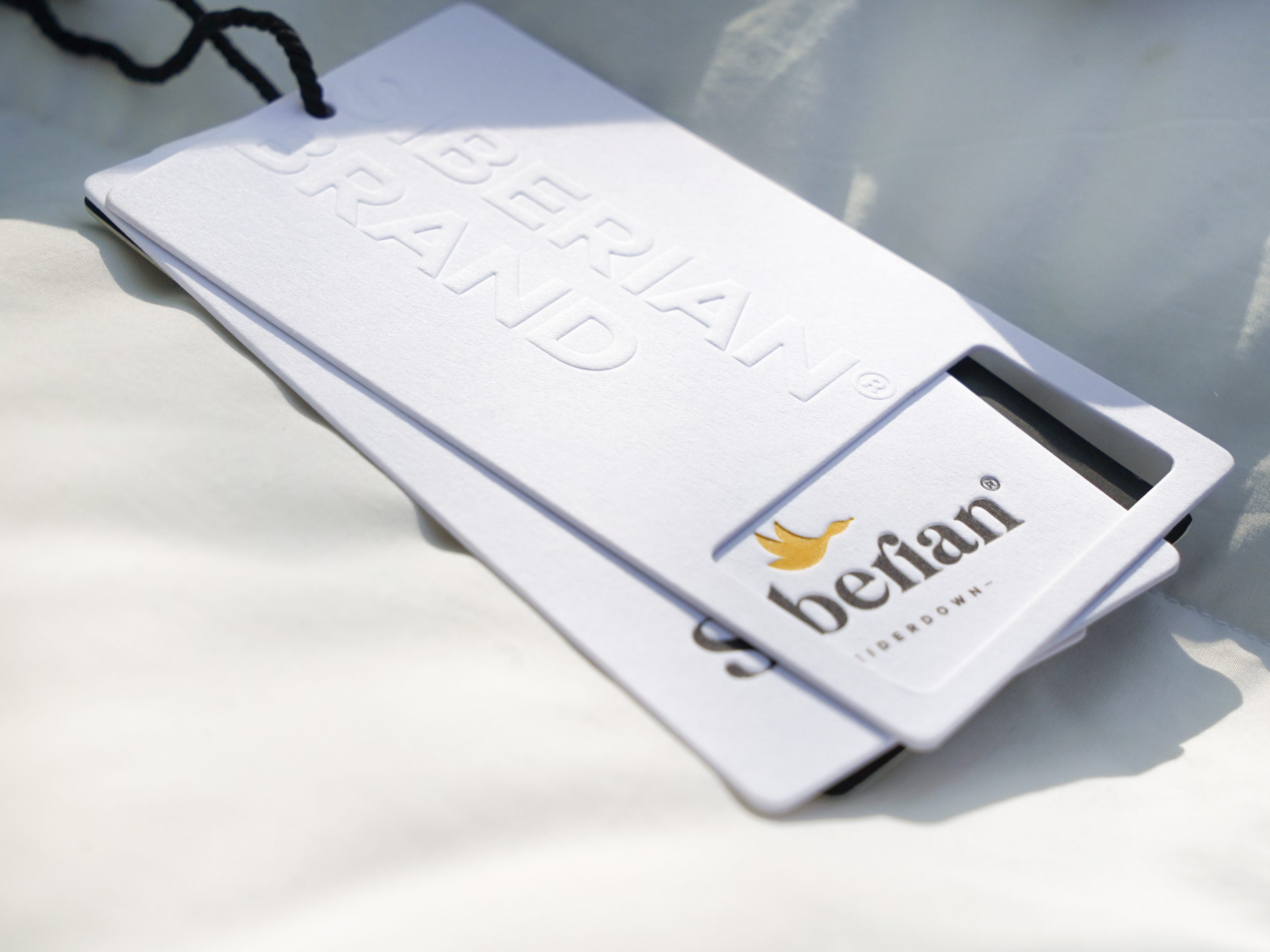
Brand Customization
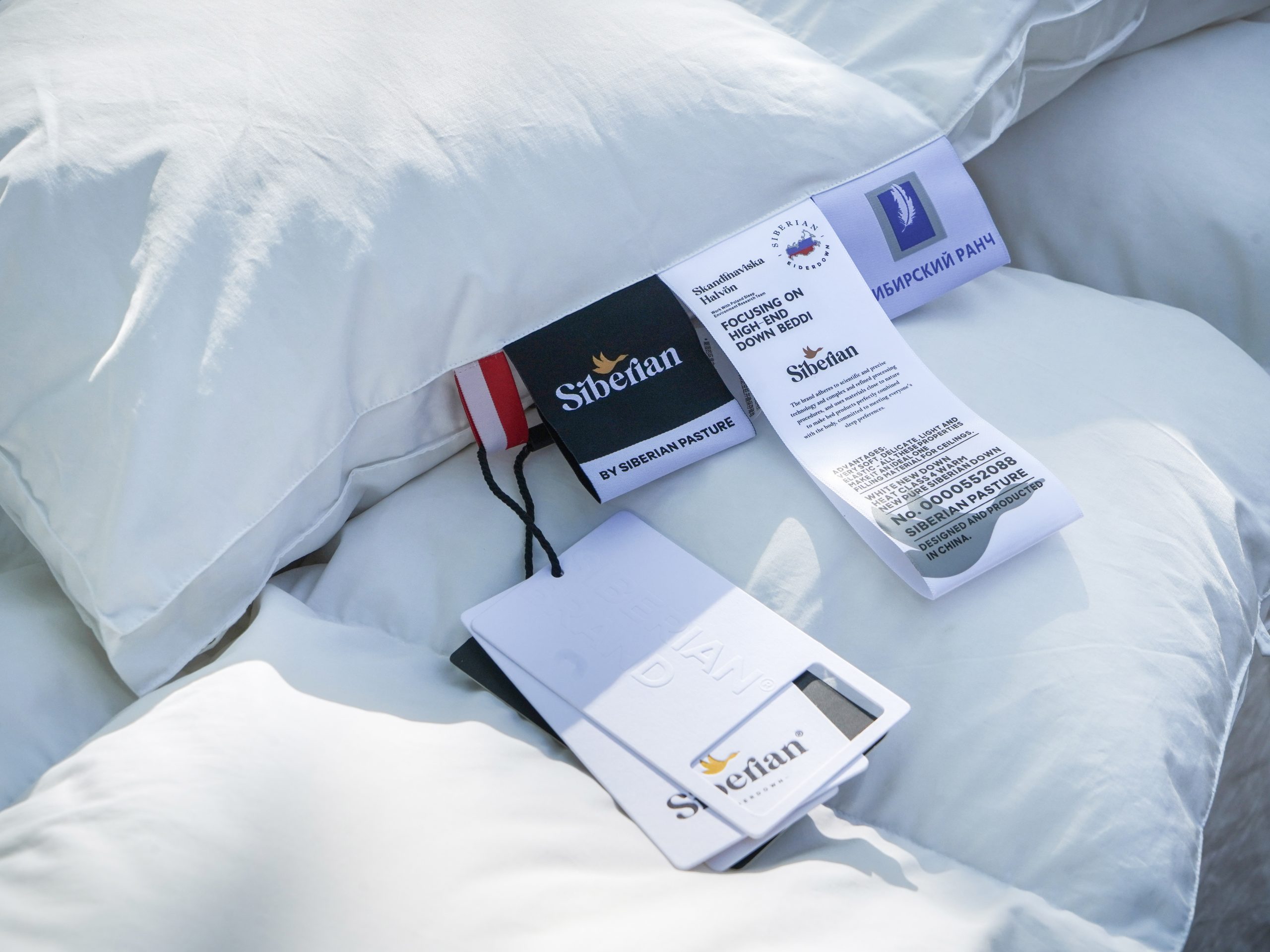
Customized logo application is available.
Options include:
Woven labels
Printed labels
Corner tags
Wash care labels
Private brand packaging
Brand integration must remain subtle and aligned with product positioning.
Winter duvet comforters often represent core seasonal products within collections. Clear branding supports retail identity without compromising aesthetic simplicity.
Application Versatility
Winter duvet comforters serve multiple environments:
Home
Hotel
Guesthouse
Office rest areas
Travel accommodations
Each application may require variation in weight, fabric, and packaging.
Hotel programs often emphasize durability and wash resistance.
Home collections may focus on loft and softness.
Specifications are adjusted accordingly.
Manufacturing in Nantong
Nantong’s textile cluster offers a concentrated advantage.
Fabric weaving.
Down processing.
Cutting and sewing.
Quilting and filling.
Inspection and packing.
The proximity of these stages shortens communication cycles and stabilizes scheduling.
Down comforters require coordinated timing between shell production and filling preparation.
Integrated regional supply ensures continuity.
Volume Planning and Production Stability
Down comforter production involves fabric weaving, dyeing (if colored), down procurement, filling preparation, stitching, and packaging.
Structured production planning enhances efficiency.
When shell fabric production reaches stable meterage per color or specification, weaving and dyeing lines operate smoothly. Down filling procurement aligns with scheduled volumes.
Fragmented micro-runs increase setup cost and disrupt workflow.
Defined seasonal planning ensures consistent cost structure and stable delivery timelines.
Quality Control Protocol
Winter duvet comforters undergo layered inspection:
Fabric density testing
Down-proof testing
Filling weight verification
Stitch alignment inspection
Leakage testing
Final dimensional measurement
Cold climate performance relies on consistency.
Uniform loft distribution is critical.
Packaging Solutions
Packaging options include:
Vacuum compression
Non-woven storage bags
Fabric zipper bags
Retail-ready packaging
Compression reduces shipping volume but must be carefully controlled to preserve loft recovery.
Proper packaging balances logistics efficiency with product integrity.
Sustainability and Longevity
Down is a natural insulator.
With proper care, down comforters maintain performance for years.
Durability depends on:
Shell fabric strength
Stitching precision
Filling cleanliness
Proper washing guidelines
Sustainability includes extending product lifecycle through structural integrity.
Winter Comfort as Engineered Balance
Warmth is not accidental.
It results from calibrated ratios, tested materials, and structured production.
The visible softness of a down comforter is supported by invisible discipline.
From 100% cotton down-proof shell (133×100)
To 75% feather / 25% down filling
To customizable fill weight
To precision box stitching
To sustainable processing
To logo customization
To multi-environment application
Every detail is measurable.
Conclusion
A winter duvet comforter appears simple — white, voluminous, inviting.
Behind that simplicity stands technical control.
Fabric selection.
Weave density.
Filling ratio.
Stitching structure.
Weight calibration.
Inspection discipline.
We are a Nantong home textile factory operating within a mature textile ecosystem.
Our fabric range is extensive.
Our filling specifications are customizable.
Our stitching techniques are engineered for performance.
Our branding integration remains flexible.
Winter demands insulation.
Insulation demands precision.
Precision demands structured manufacturing.
In Nantong, that structure defines how down duvet comforters are made — not as seasonal commodities, but as engineered bedding systems designed for warmth, durability, and clarity of specification.

Reviews
There are no reviews yet.