
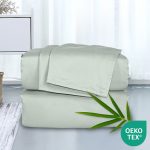
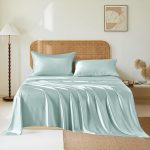
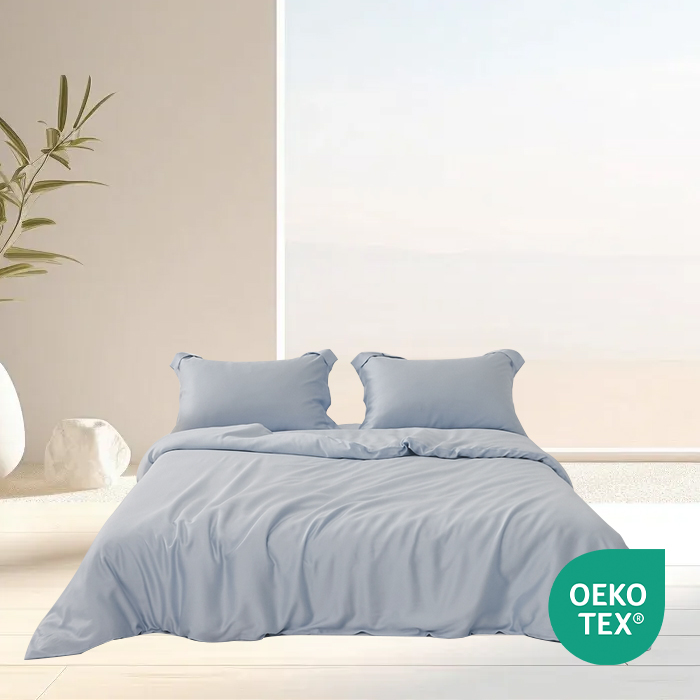
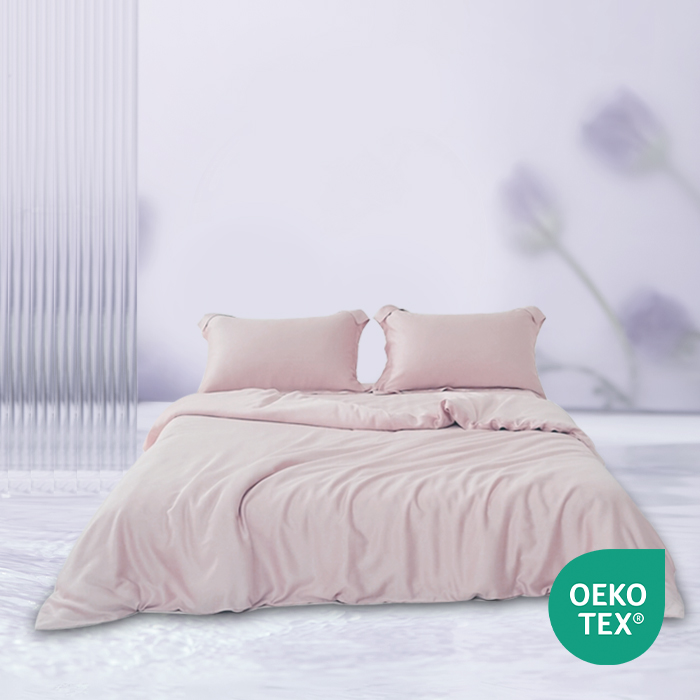
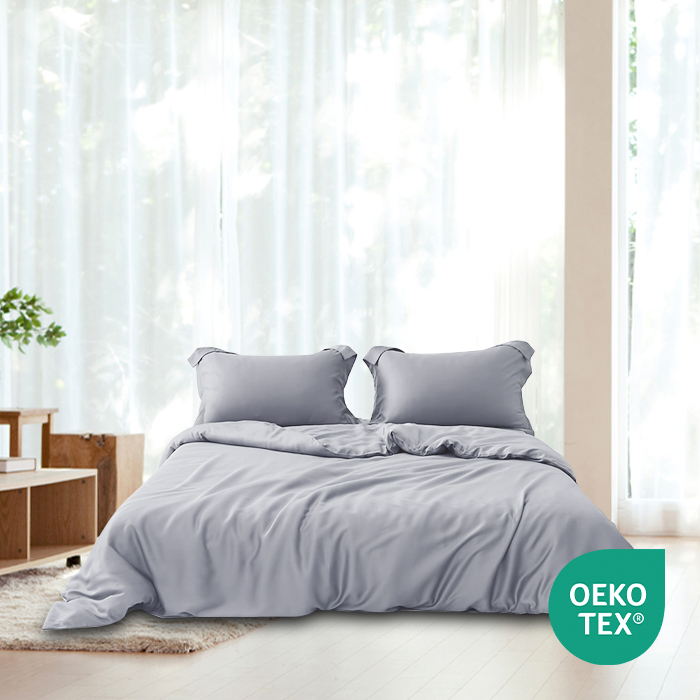
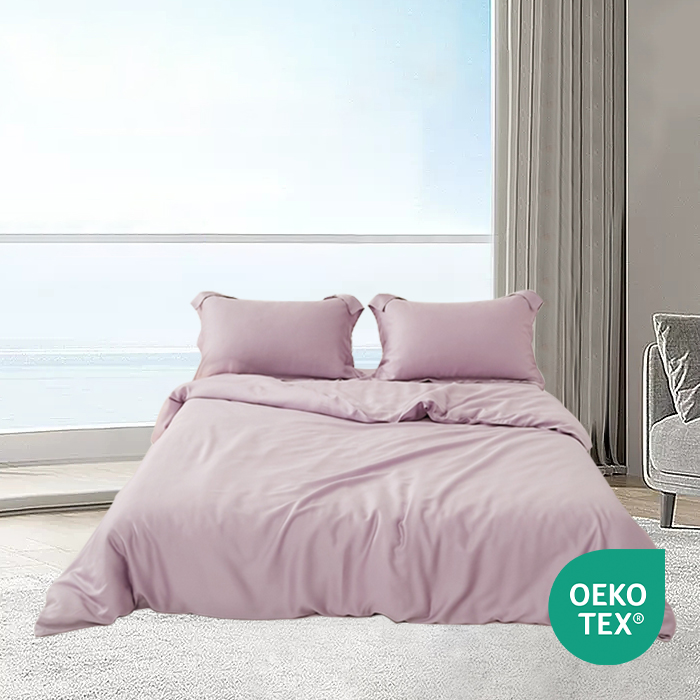
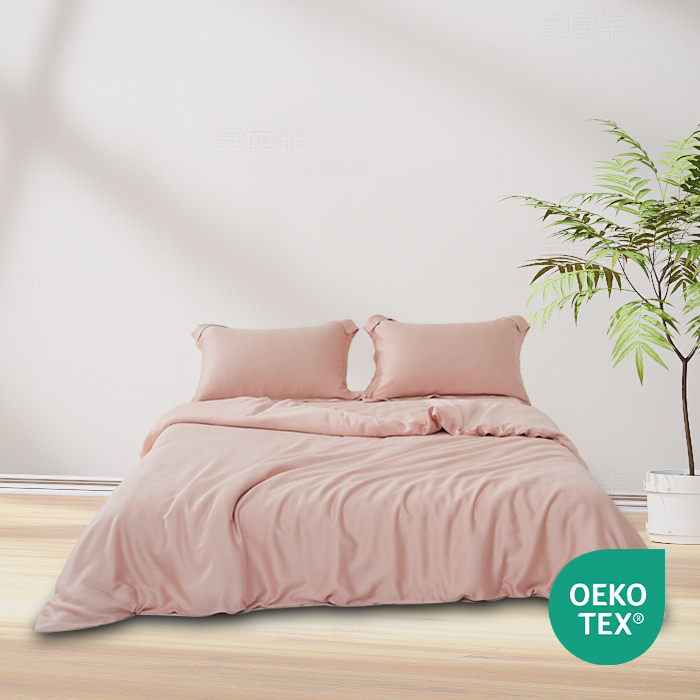
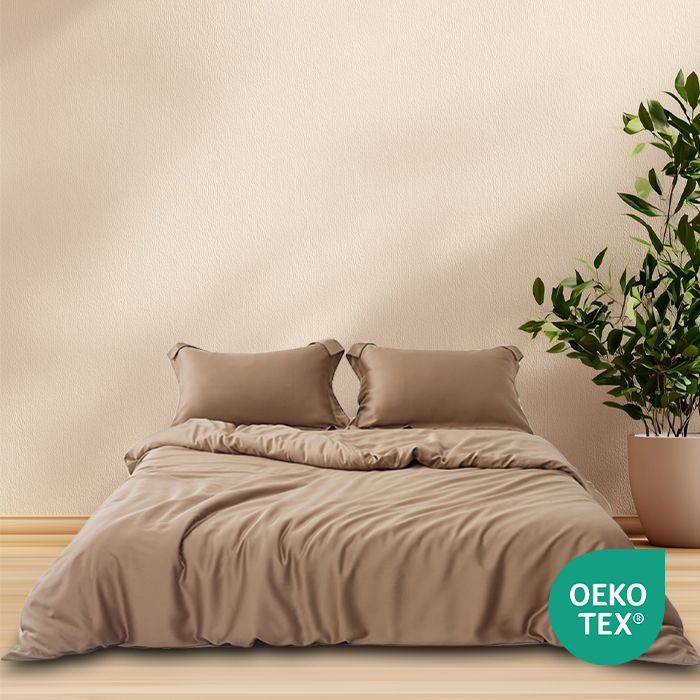
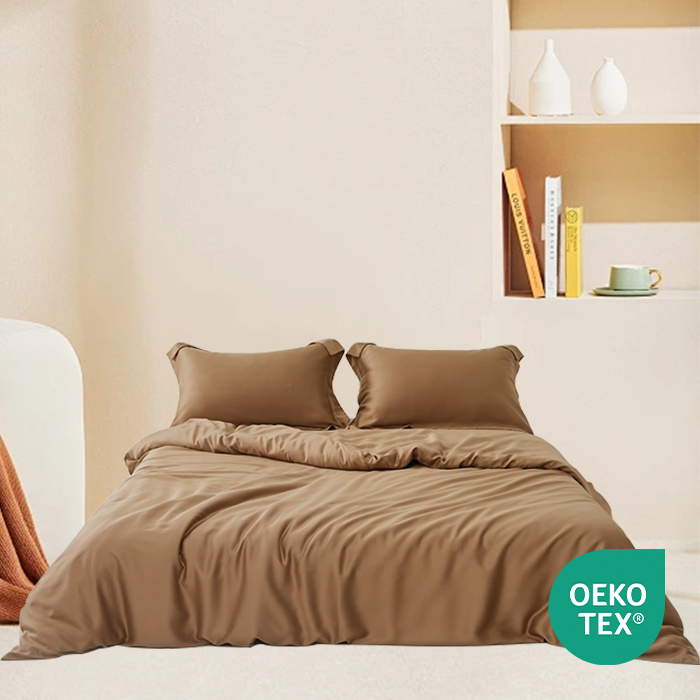




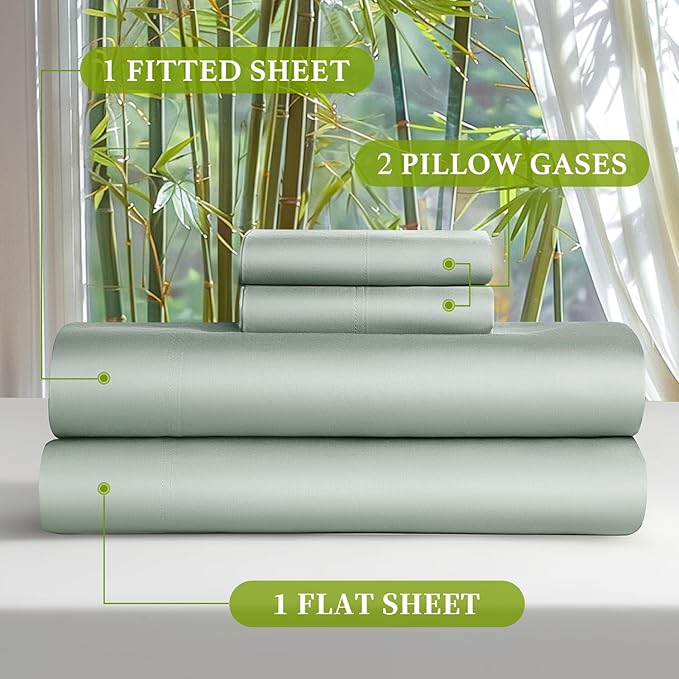
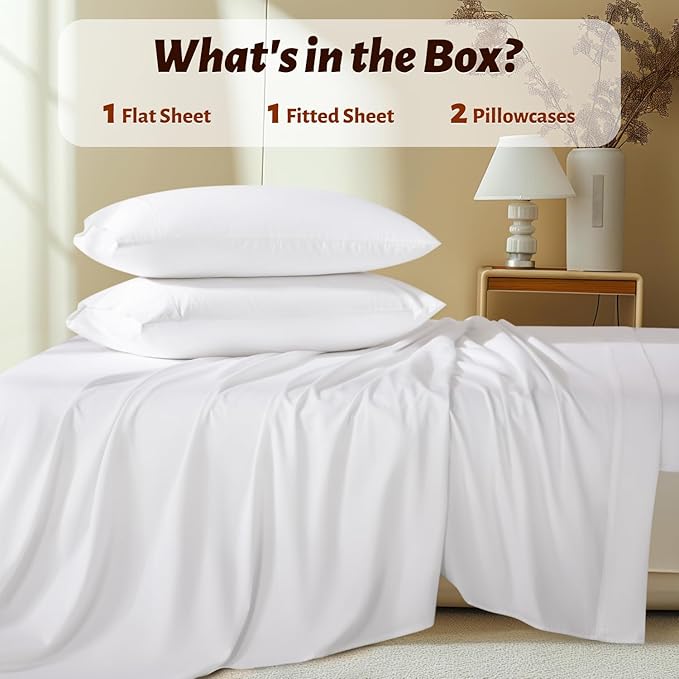
60S 275TC Tencel™ Cotton Interwoven Fitted Sheet Set: Structural Balance, Performance Engineering, and Volume Discipline for EU & US Buyers
In the premium bedding segment across Europe and North America, hybrid fiber constructions are increasingly replacing single-fiber dominance. Among them, 60S 275TC Tencel™ cotton interwoven fitted sheet sets represent a technically balanced category positioned between crisp cotton percale and fluid Tencel™ sateen.
For mature procurement teams, this construction is not a marketing blend but a deliberate textile engineering decision. The interwoven structure—rather than simple fiber blending—creates measurable performance advantages in durability, breathability, and drape control.
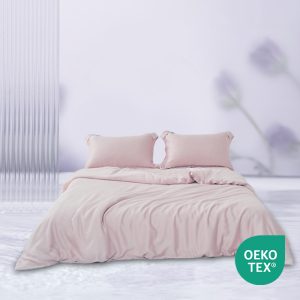
This paper outlines the fiber composition logic, construction specifications, finishing control, and commercial planning framework required to develop a stable 60S 275TC Tencel™ cotton fitted sheet program for EU and US retail channels, under the structured minimum order requirement of 2000 meters per solid color or per individual print design.
Understanding the Construction: Interwoven, Not Blended
It is essential to clarify the structural distinction.
Many products labeled “Tencel cotton” are fiber-blended at yarn stage, meaning Tencel™ and cotton fibers are mixed before spinning.
In contrast, the 60S 275TC construction discussed here uses an interwoven method:
- Warp yarn: 32S combed cotton
• Weft yarn: 60S Tencel™ Lyocell
(or vice versa depending on specification)
This interwoven structure ensures:
- Cotton contributes tensile strength and dimensional stability
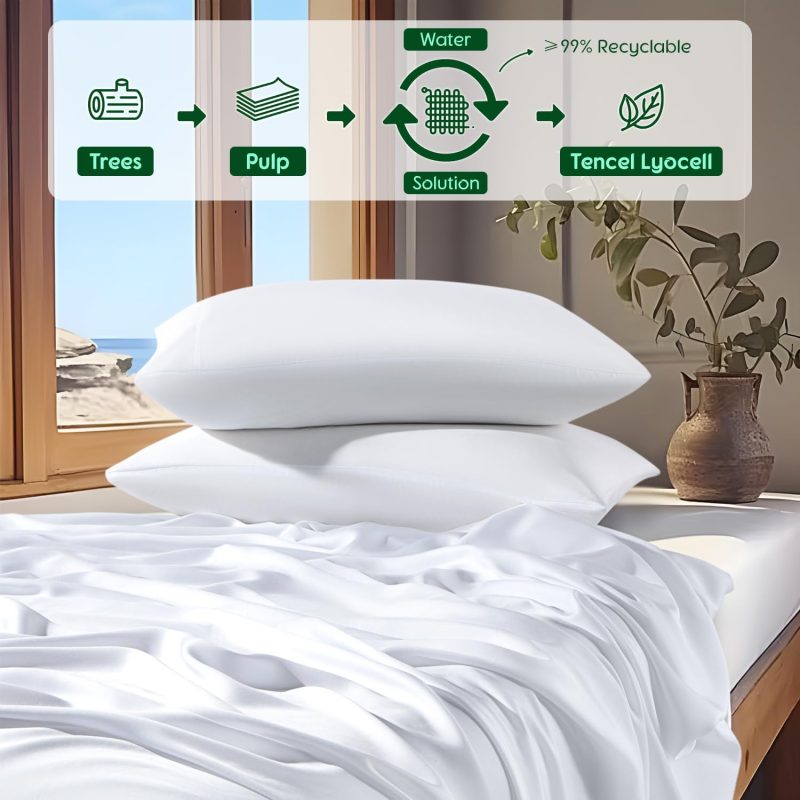
• Tencel™ contributes smoothness and moisture regulation
• Fiber benefits remain distinct rather than averaged
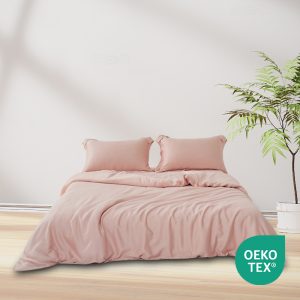
For mature buyers, this structural clarity affects both performance expectation and price justification.
Interwoven construction typically delivers more consistent surface behavior compared to blended yarn fabrics, where fiber migration during washing may influence hand feel.
Fiber Specification & Yarn Count
60S refers to yarn count (English cotton count system), indicating finer yarns compared to 40S or 32S constructions.
At 60S yarn level:
- Surface texture is smoother
• Fabric weight remains moderate
• Breathability improves
• Drape becomes more refined
With 300 thread count (275TC), the balance is optimized:
- Dense enough for durability
• Open enough for airflow
• Structured enough for fitted sheet integrity
Exceeding 275TC in this interwoven construction may compromise breathability and increase stiffness.
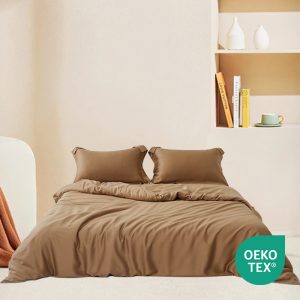
In EU and US markets, 60S 275TC is widely considered premium-mid to premium tier when properly finished.
Performance Characteristics in Bedding Applications
The interwoven Tencel™ cotton structure delivers measurable performance attributes:
Surface Comfort
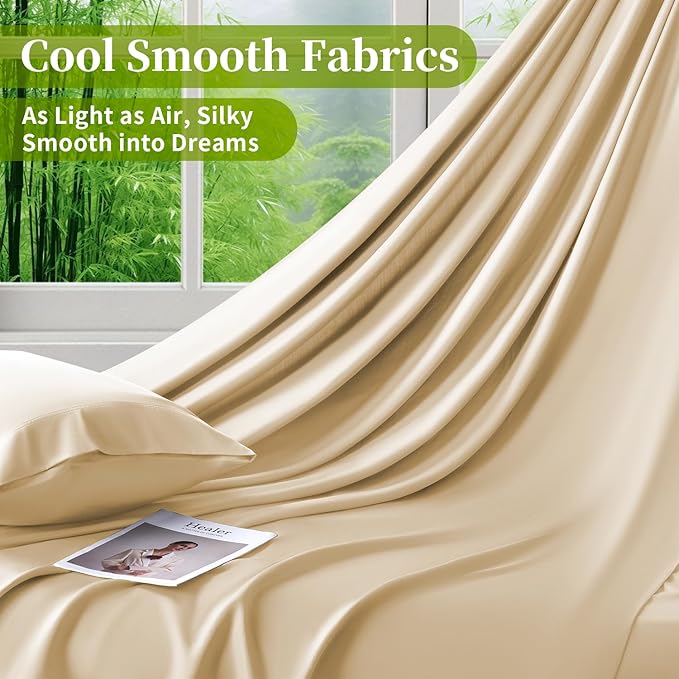
Tencel™ weft yarns create smooth skin contact and reduced friction.
Structural Stability
Cotton warp yarns maintain dimensional integrity during washing cycles.
Moisture Regulation
Tencel™ absorbs and releases moisture more efficiently than cotton alone.
Wrinkle Moderation
Compared to 100% cotton percale, this interwoven fabric wrinkles less due to Tencel™’s fiber behavior.
Long-Term Softness
Unlike heavy silicon-finished cotton, softness is fiber-driven rather than coating-dependent.
For fitted sheet sets, these properties provide practical advantages:
- Reduced night-time overheating
• Maintained mattress grip
• Balanced softness and strength
Fabric Weight & Finishing
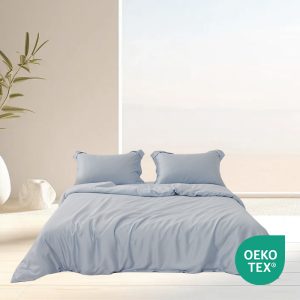
Typical GSM for 60S 275TC interwoven fabric ranges between:
- 115–135 GSM
This weight supports year-round use across temperate climates.
Finishing processes include:
- Pre-shrinking (sanforization equivalent control)
• Softening (controlled, not excessive)
• Heat setting for dimensional stability
Over-softening may reduce durability; insufficient finishing may leave cotton-dominant stiffness.
A balanced finishing program preserves both fiber identities.
Minimum Order Requirement: 2000 Meters per Color or Per Print
Production begins at fabric level.
Minimum order quantity:
2000 meters per solid color
or
2000 meters per individual printed pattern
This MOQ ensures:
- Stable loom setup for 60S fine yarn weaving
• Dye lot consistency
• Predictable shrinkage performance
• Economically viable finishing cycles
This is not 2000 sets.
Average fabric consumption per fitted sheet set (depending on size ratio):
Approximately 8 meters per set.
Therefore:
2000 meters ÷ 8 meters ≈ 250 complete sets per color.
This volume framework supports:
- Cost stability
• Shade reproducibility
• Operational efficiency
Smaller fragmented runs reduce dye bath precision and increase per-meter cost disproportionately.
For structured EU and US retail programs, 250 sets per color represents manageable launch volume aligned with organized distribution channels.
Size Allocation Strategy
US market allocation typically follows:
- 60–65% Queen
• 25–30% King
• 5–10% Full/Twin
From 250 sets per color:
- ~150 Queen
• ~75 King
• Remaining smaller sizes
King fitted sheets require reinforced elastic and precise grading due to higher surface area tension.
Incorrect size planning leads to capital lock in slower-moving SKUs.
Color Strategy for Interwoven Programs
Because cotton and Tencel™ absorb dye differently, dye calibration must account for fiber duality.
Interwoven fabrics may exhibit subtle tone depth differences depending on which fiber dominates surface exposure.
Core Launch Colors (each requiring 2000 meters):
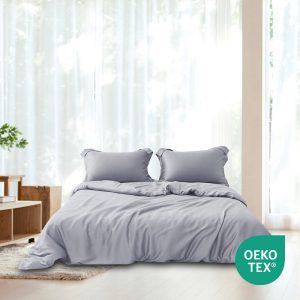
- Hotel white
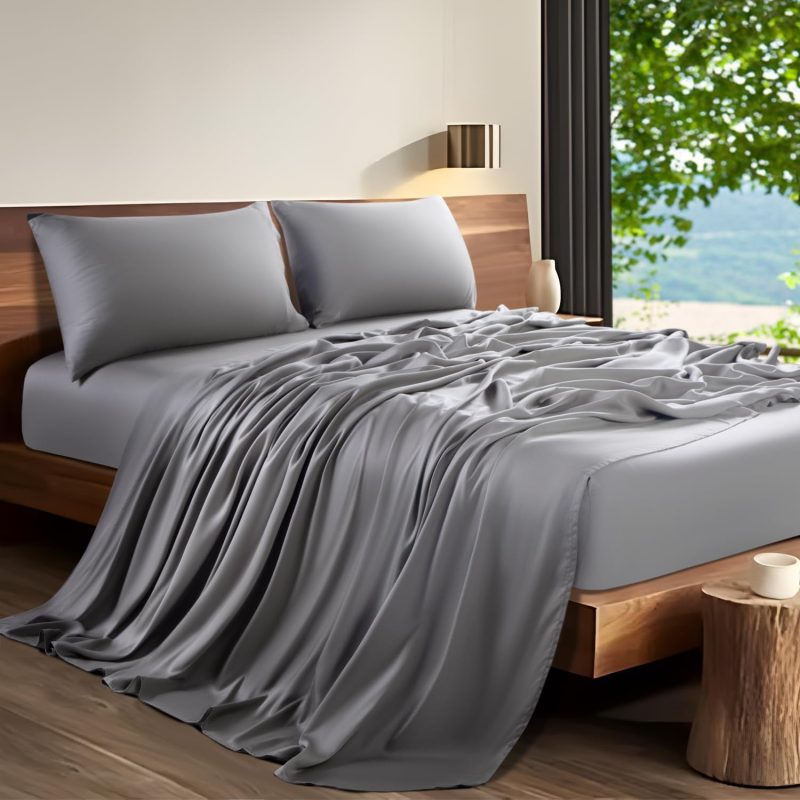
• Light silver grey
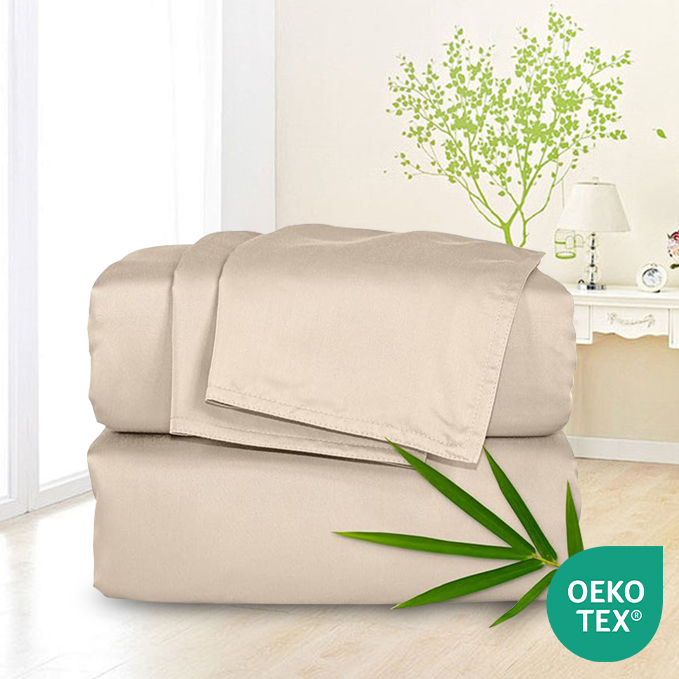
• Champagne beige
• Dusty blue
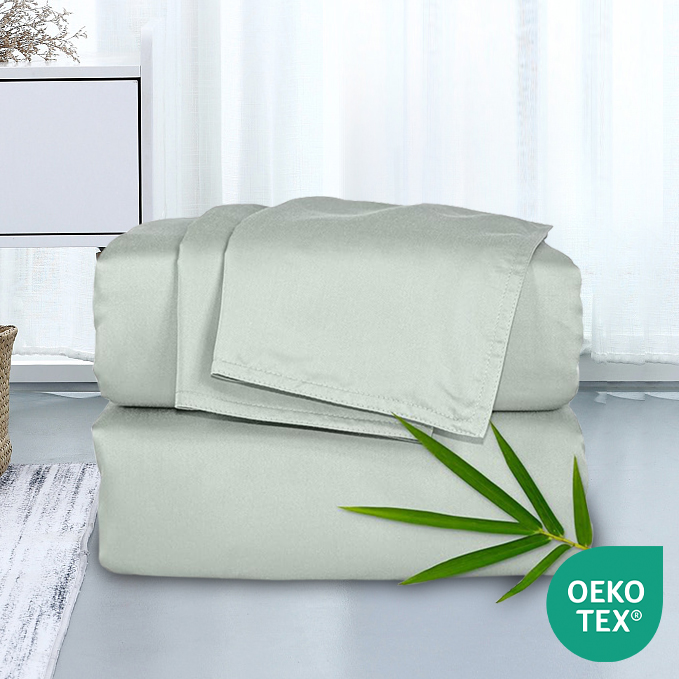
• Muted sage
Seasonal prints require separate 2000-meter commitments per pattern.
Due to fine 60S yarn, printing registration must be precisely controlled to avoid distortion.
SKU expansion beyond 4–6 core shades in initial launch is generally not recommended.
Fitted Sheet Engineering
Interwoven 60S 275TC fabric has moderate drape—not as fluid as 100% Tencel™, not as rigid as percale.
Engineering specifications:
- 360-degree encased elastic
• Reinforced corner seams
• 14–16 inch deep pocket (US standard)
• Structured seam finishing
Elastic quality is critical. Lower-grade elastic undermines fabric-level investment.
Wash Performance & Durability
Testing protocol should include:
- 40°C wash
• Tumble dry simulation
• Minimum 3 wash cycles
• Shrinkage measurement (target below 5%)
• Pilling evaluation
Interwoven construction typically demonstrates:
- Better pilling resistance than blended yarn fabrics
• Improved wrinkle recovery compared to pure cotton
• Stable hand feel after repeated laundering
Certification & Fiber Authenticity
If using branded Tencel™, procurement must secure:
- Fiber transaction certificate
• Hangtag authorization
• Traceability documentation
EU markets increasingly require documentation for fiber content claims.
Mislabeling risks regulatory exposure.
Cost Structure Considerations
Cost drivers include:
- 60S fine yarn spinning
• Dual fiber procurement
• Controlled weaving speed
• Precision dyeing for two fiber types
• Pre-shrink finishing
However, compared to 100% Tencel™, interwoven construction may offer:
- Better cost-to-performance ratio
• Increased structural longevity
• Reduced elastic failure complaints
Retail positioning generally sits between:
- Premium cotton sateen
• Full Tencel™ luxury tier
Working Capital & Structured Buyers
Each color represents approximately 250 sets at minimum production.
Launching 4 colors equals approximately 1000 sets initial commitment.
This scale aligns with:
- Established DTC brands
• Regional department stores
• Specialty bedding retailers
• Boutique hospitality groups
Because production begins at 2000 meters per color or print, structured forecasting is required.
Programs without defined distribution channels may struggle to absorb fabric-level commitments efficiently.
The MOQ framework protects:
- Production stability
• Dye consistency
• Margin sustainability
Lead Time Planning
Estimated timeline:
- Yarn preparation: 2–3 weeks
• Weaving (fine 60S yarn): 3–4 weeks
• Dyeing & finishing: 2–3 weeks
• Cutting & sewing: 3–4 weeks
Total: Approximately 80–95 days.
Advance planning is recommended for Q3 and Q4 peak seasons.
Risk Management
Key risk areas:
- Fiber misidentification (blend vs interwoven)
• Shade imbalance due to dual fiber dye absorption
• Elastic fatigue in king sizes
• Overextension of color range
Third-party lab testing and inline inspection are recommended during first production cycle.
Strategic Role in Bedding Portfolio
60S 275TC Tencel™ cotton interwoven fitted sheet sets occupy a strategic middle tier:
- More breathable than high-thread-count sateen
• More structured than 100% Tencel™
• Softer than cotton percale
• More durable than pure viscose
For mature procurement teams, this category provides:
- Performance balance
• Cost control
• Reduced extreme positioning
• Broad consumer appeal
Because each solid color or print begins at 2000 meters, expansion is naturally disciplined.
Conclusion
A 60S 275TC Tencel™ cotton interwoven fitted sheet set represents a fiber-engineered balance between structure and softness.
For EU and US buyers, successful execution requires:
- Clear interwoven construction specification
• 60S yarn precision control
• 275TCbalanced density
• 2000 meters minimum per solid color or per printed design
• Approximate 250 sets yield per color (based on 8 meters per set)
• Strategic size ratio allocation
• Controlled SKU expansion
• Verified fiber documentation
The 2000-meter minimum ensures:
- Dye lot consistency
• Weaving efficiency
• Finishing stability
• Predictable cost structure
For structured buyers with defined retail channels, this construction offers long-term portfolio stability and competitive differentiation.
For operations without clear forecasting discipline, further distribution development may be advisable before entering fine-yarn interwoven programs.
In a bedding market seeking balance between natural fiber familiarity and technical innovation, 60S 275TC Tencel™ cotton interwoven fitted sheet sets provide a commercially viable and technically sound solution—when approached with volume clarity and procurement discipline.
Reviews
There are no reviews yet.